A telescope is a precision instrument. The mirror must be within a fraction of a wavelength of the target parabola. The focuser must move smoothly without flex. The mount must track the sky without backlash. None of this sounds like a 3D printing project — and yet, here we are.
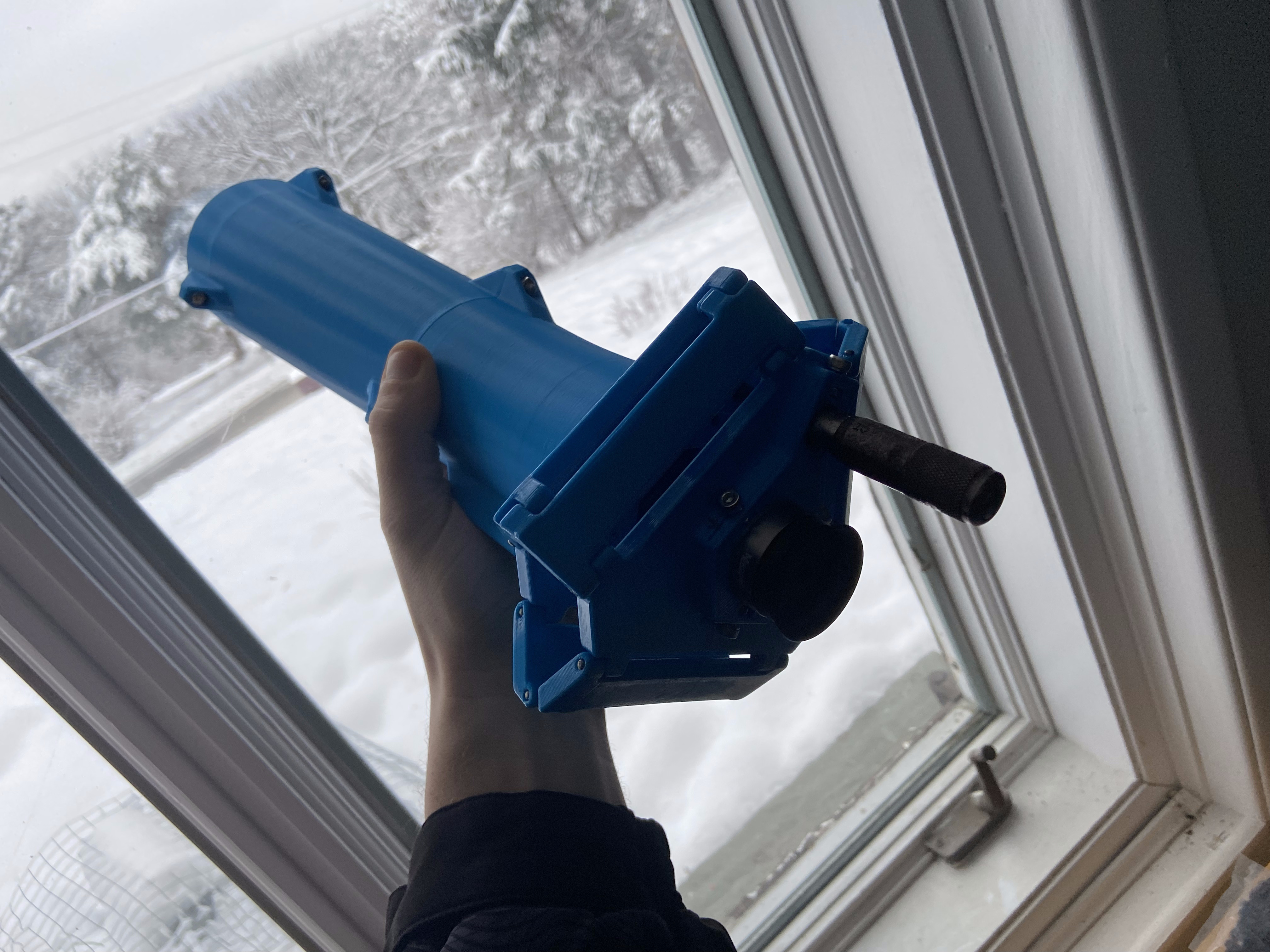
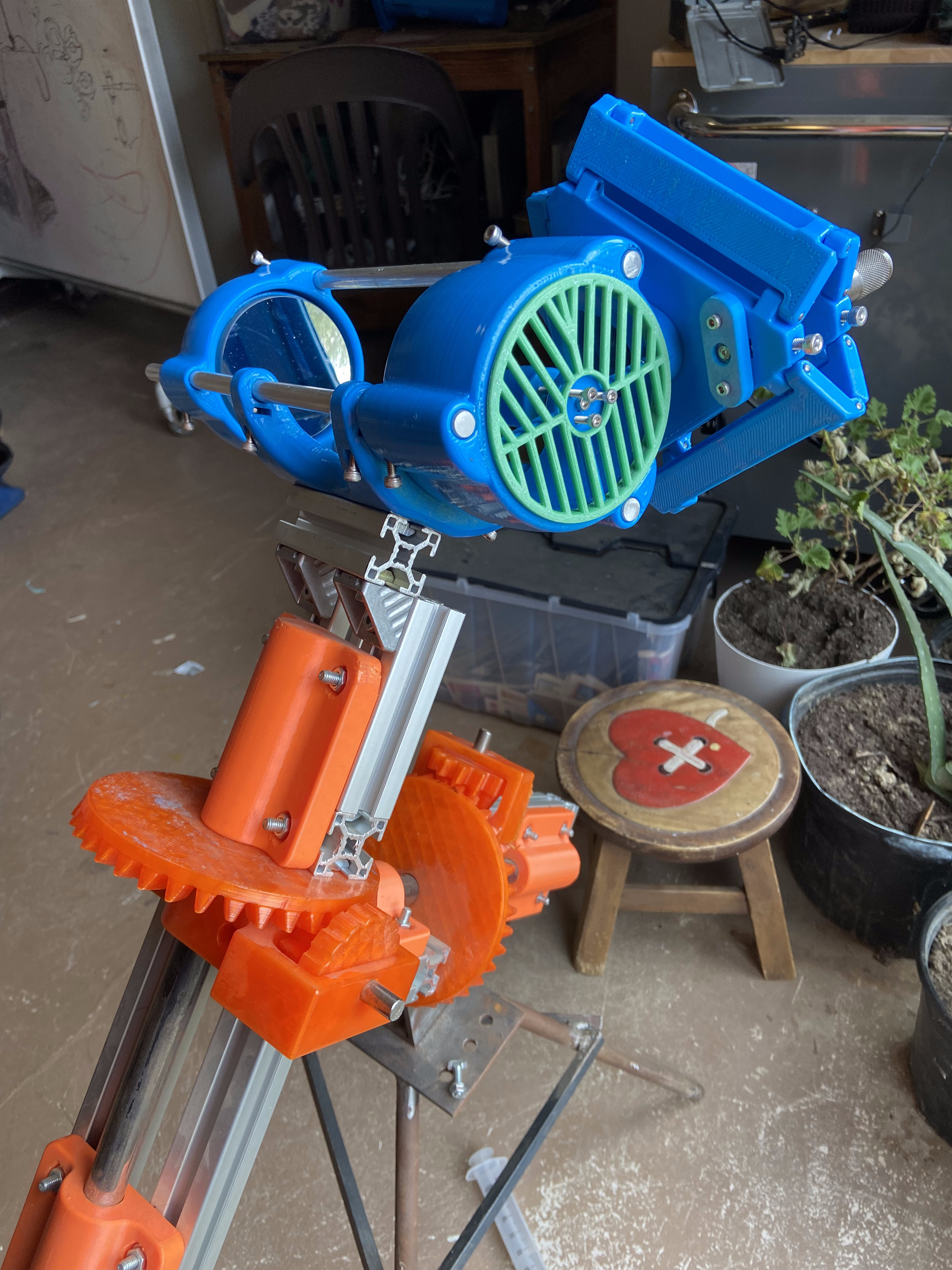
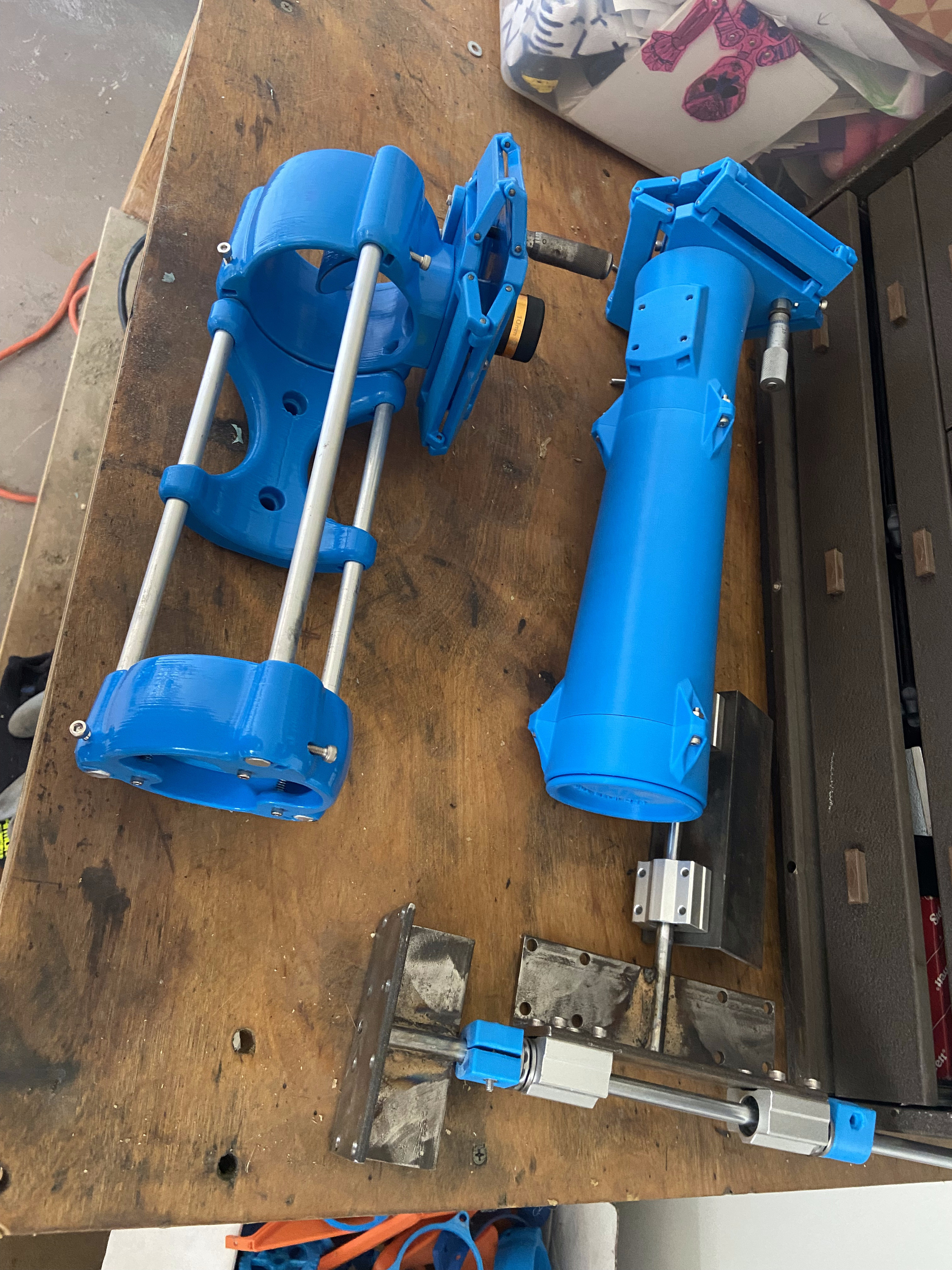
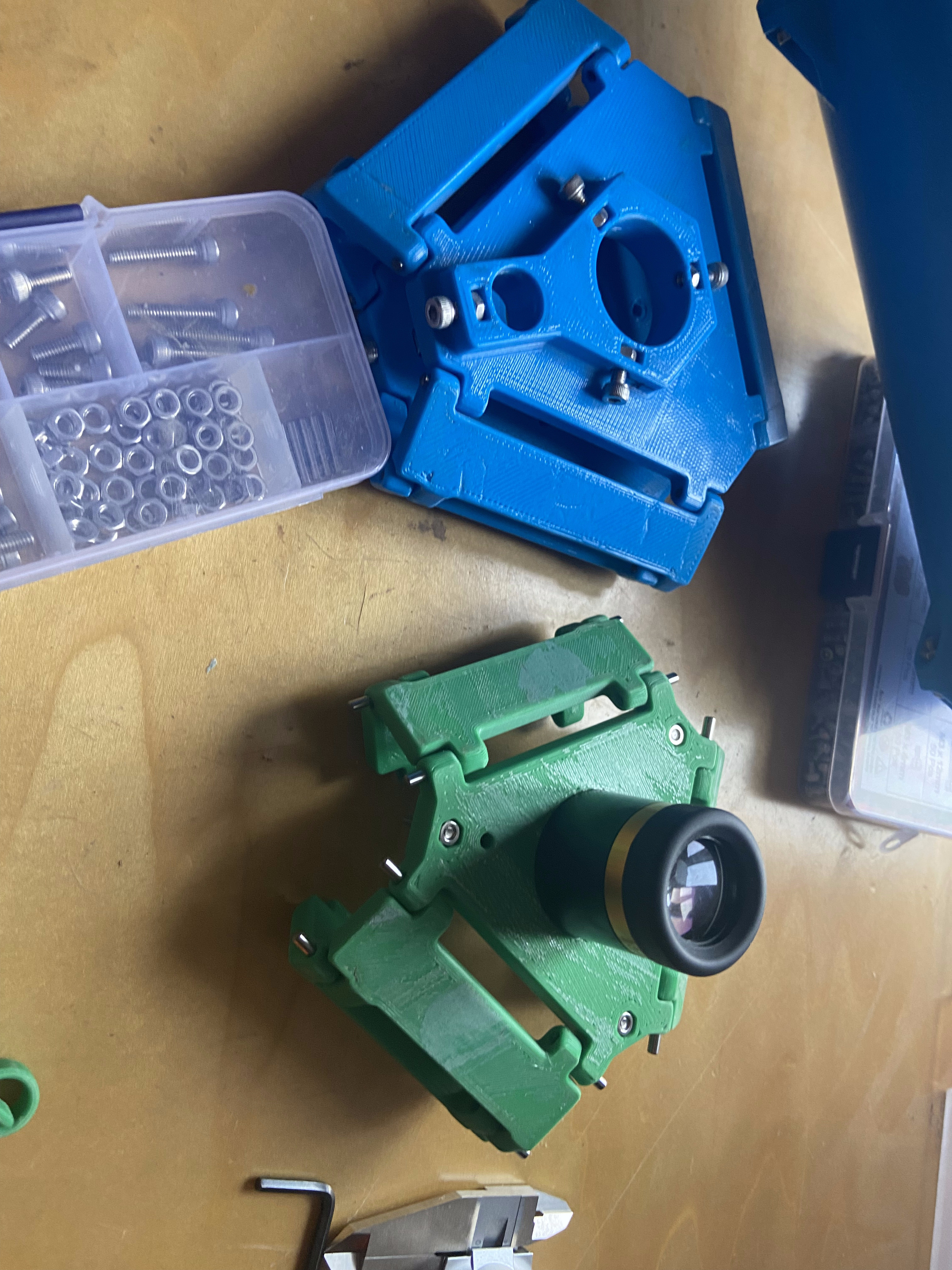
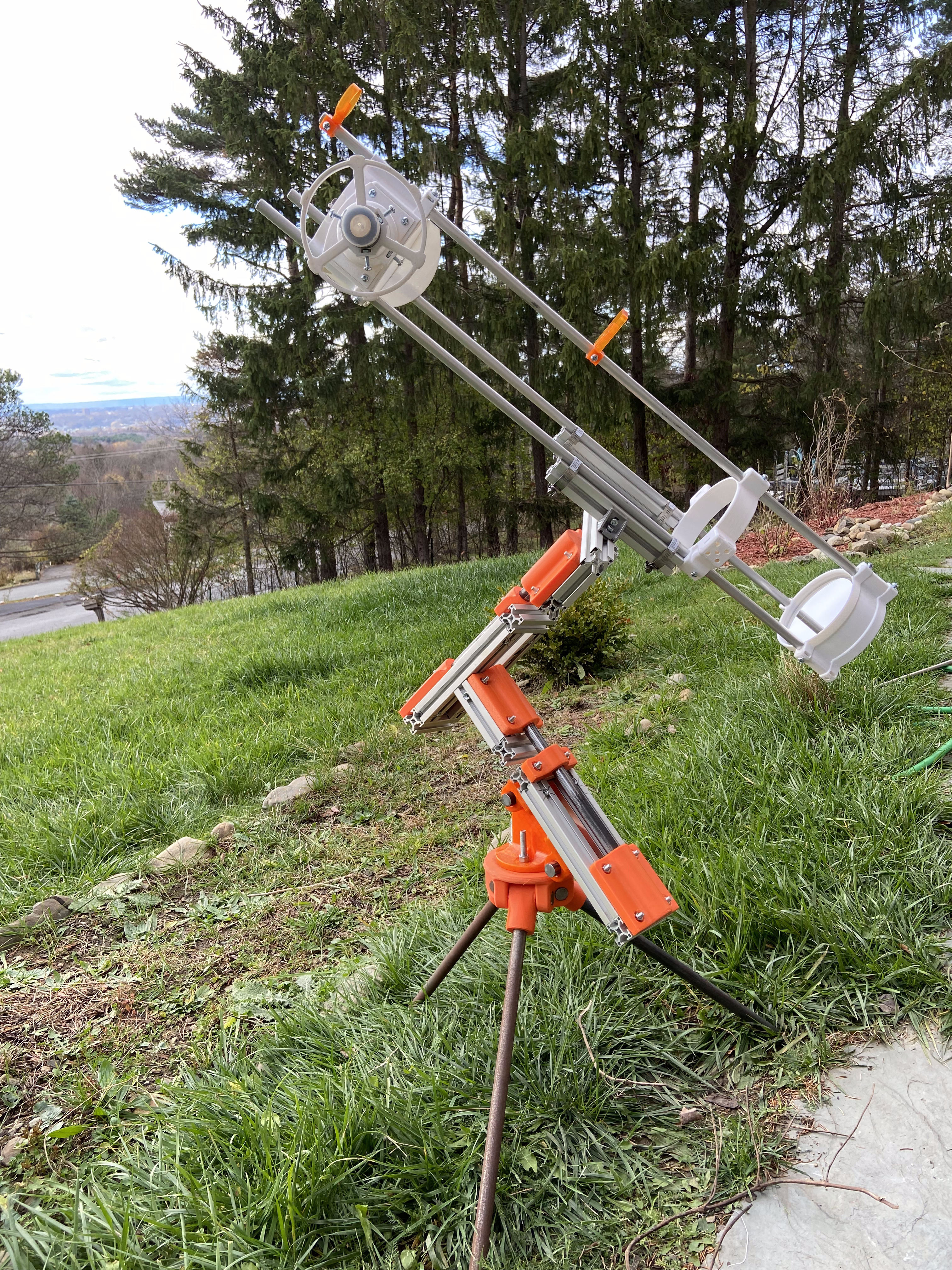
The tube is a Newtonian reflector: primary mirror at the bottom, secondary diagonal mirror near the top, focuser on the side. The entire tube assembly — mirror cell, secondary spider, focuser housing, tube rings — was designed and printed in blue PLA. A dedicated mirror fan cooler attaches at the back: a green-bladed axial fan in a printed shroud that accelerates thermal equilibration between the mirror and the ambient air. Without it, mirror currents blur the image for the first hour of a session. With it, that window shrinks to minutes.
The equatorial mount is the more demanding build. It has to rotate about two axes aligned to the celestial poles, carry the telescope without flexing, and allow fine adjustments through worm gear drives. The axis housings are printed in blue, the structural elements machined aluminium rod and extrusion, the gears and clamps printed in orange. The tripod stakes directly into the ground. The whole assembly weighs about four kilograms and holds alignment through a session.
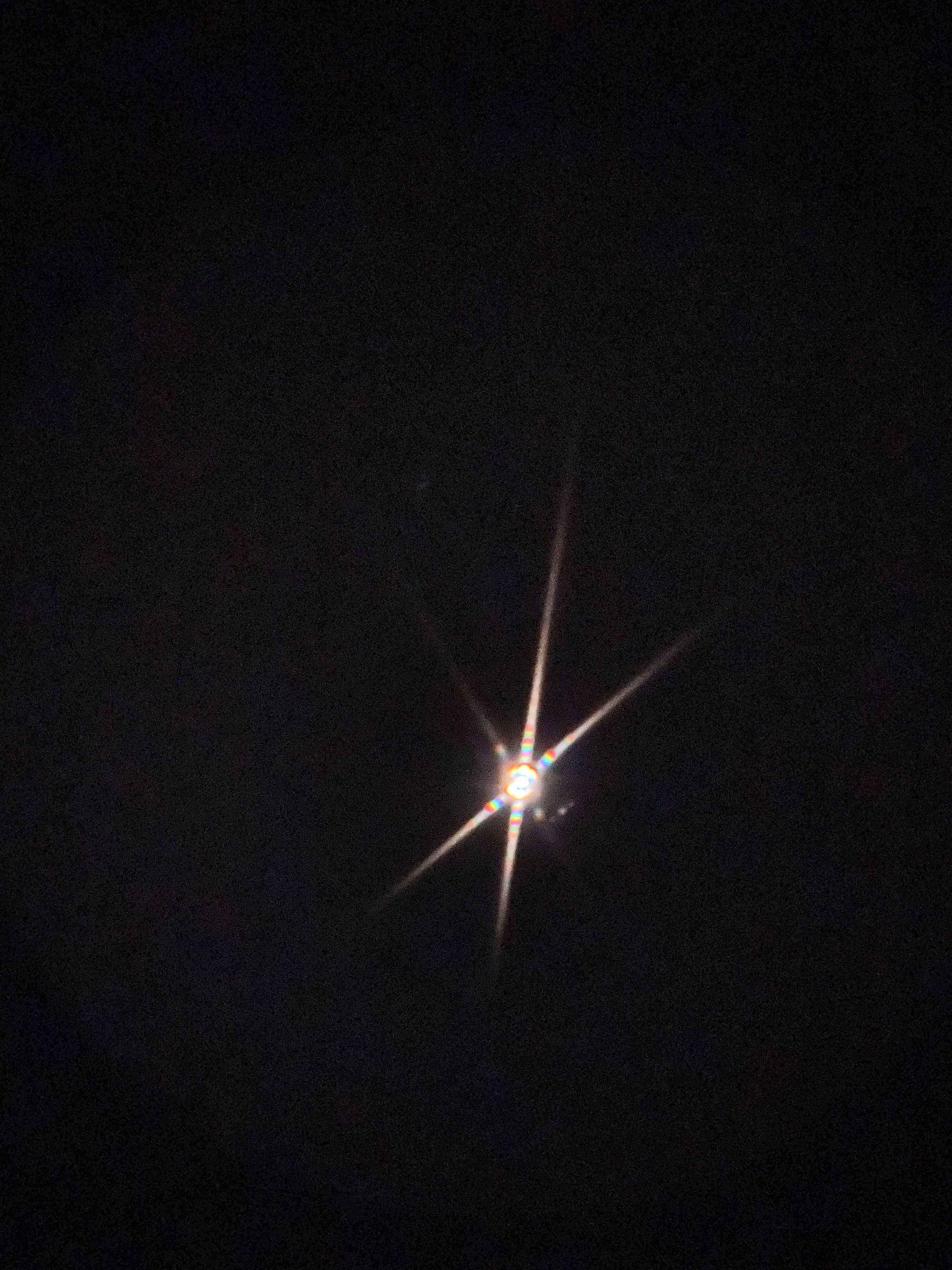
First light through the completed system: a star. A bright one. It resolved as a sharp diffraction spike pattern — the characteristic signature of a well-collimated reflector. That is the entire point. You printed a telescope. You pointed it at a star. The star looked like a star.
The argument against printing optical instruments is that plastic moves — it creeps under load, changes dimension with temperature, and vibrates differently than metal. These are real constraints. The answer is not to pretend they don't exist but to design around them: oversize the structural members, use hardware inserts for load-bearing threads, accept that re-collimation after a temperature swing is part of the workflow. The mount has adjustment built into every axis precisely because nothing is dimensionally perfect. The telescope works not despite its imprecision but through a design that accommodates it. That is an engineering lesson worth learning at any scale.