Every living systems project in the gallery shares the same discipline: engineer the conditions, then get out of the way. The animal or plant does the work. Your job is substrate, temperature, humidity, light, water — the parameters. Get them right and things grow. Get them wrong and they don't. The feedback is unambiguous.
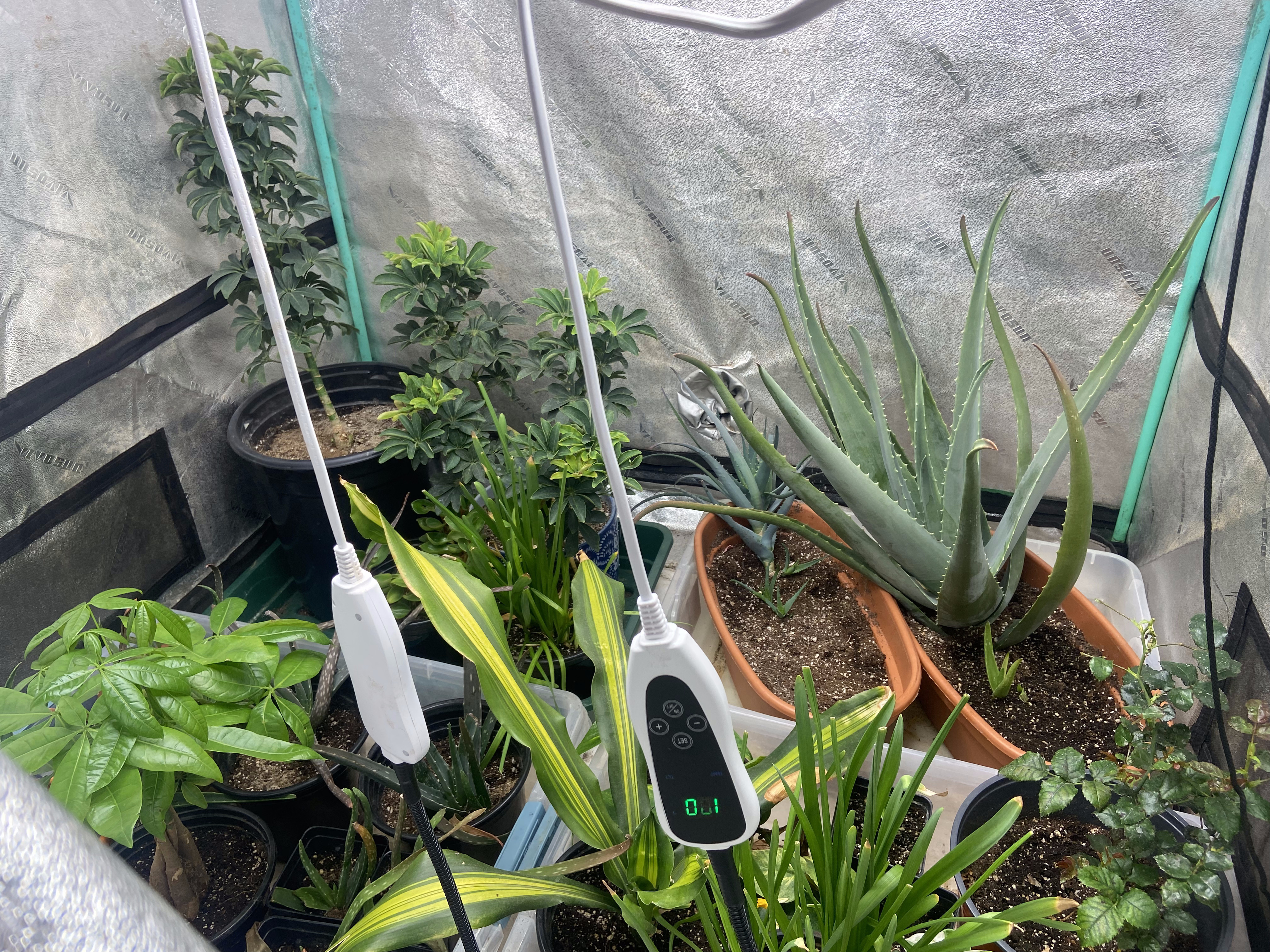
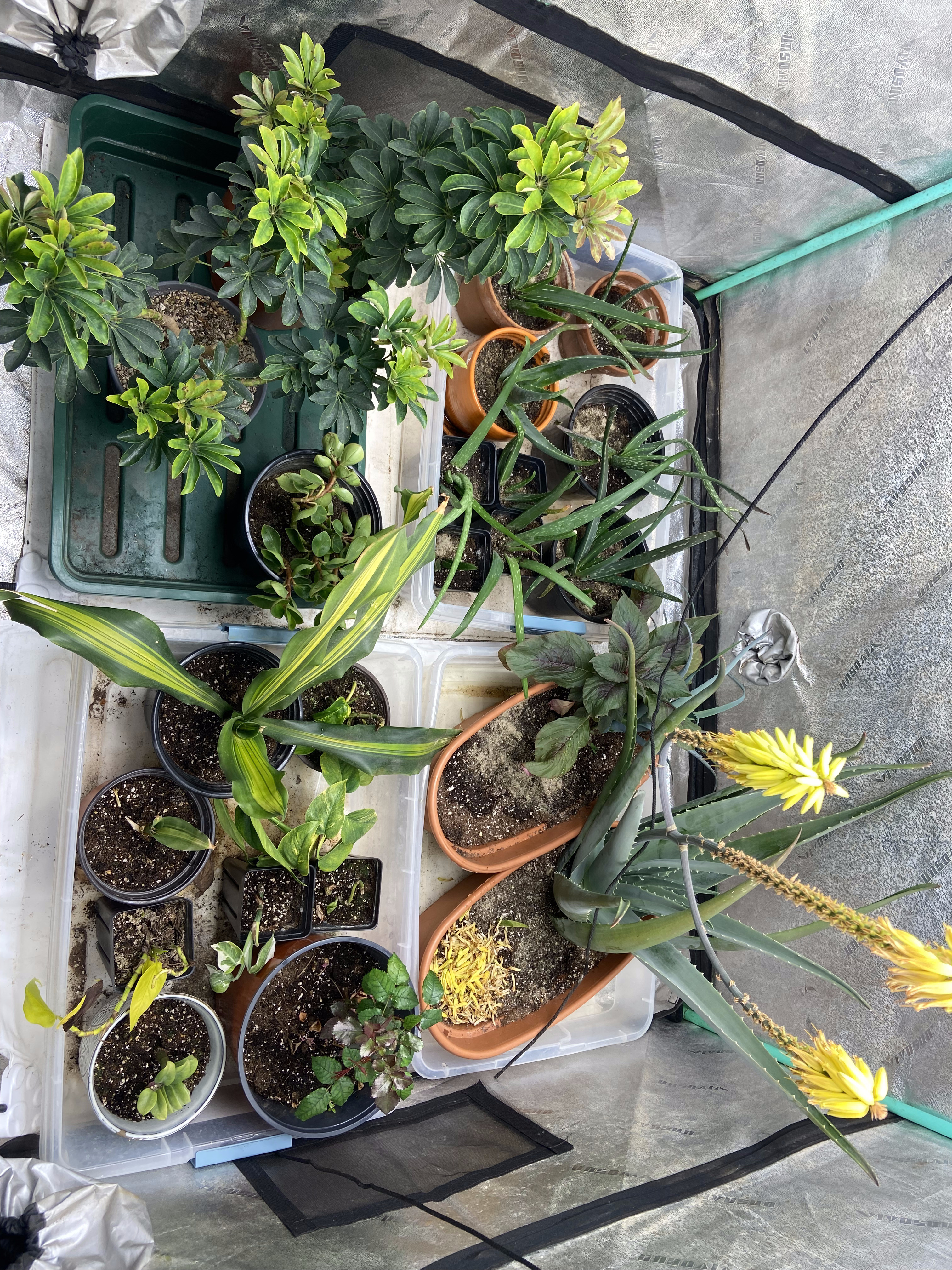
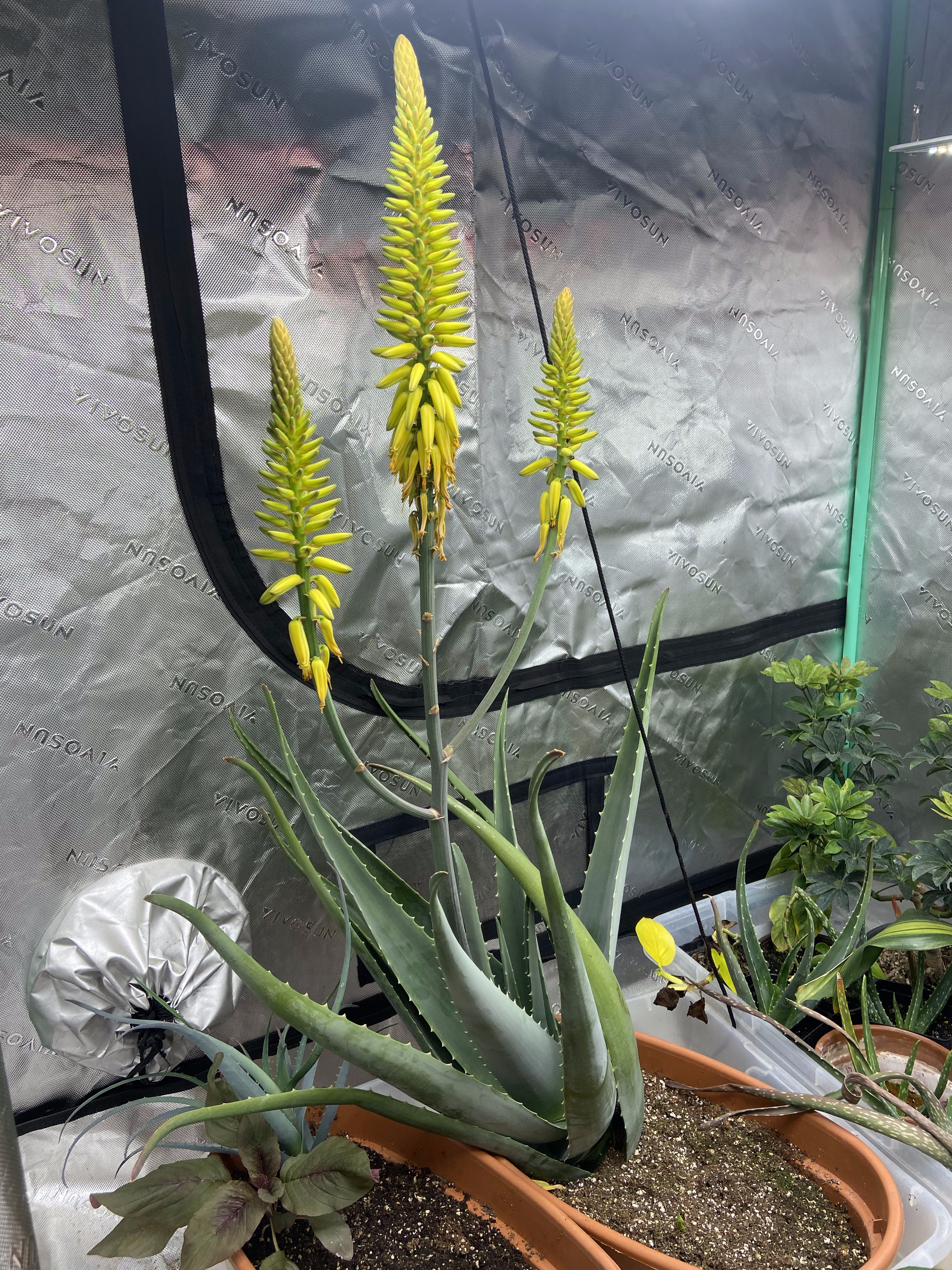
The indoor greenhouse is a reflective grow tent with supplemental lighting and soil moisture sensors feeding a digital readout. The sensors take the guesswork out of watering — which is the most common way people kill plants. The display shows real-time soil moisture so you can see a number instead of making a judgment call. The plants respond to being watered correctly by growing. It's a closed loop with a very long time constant.
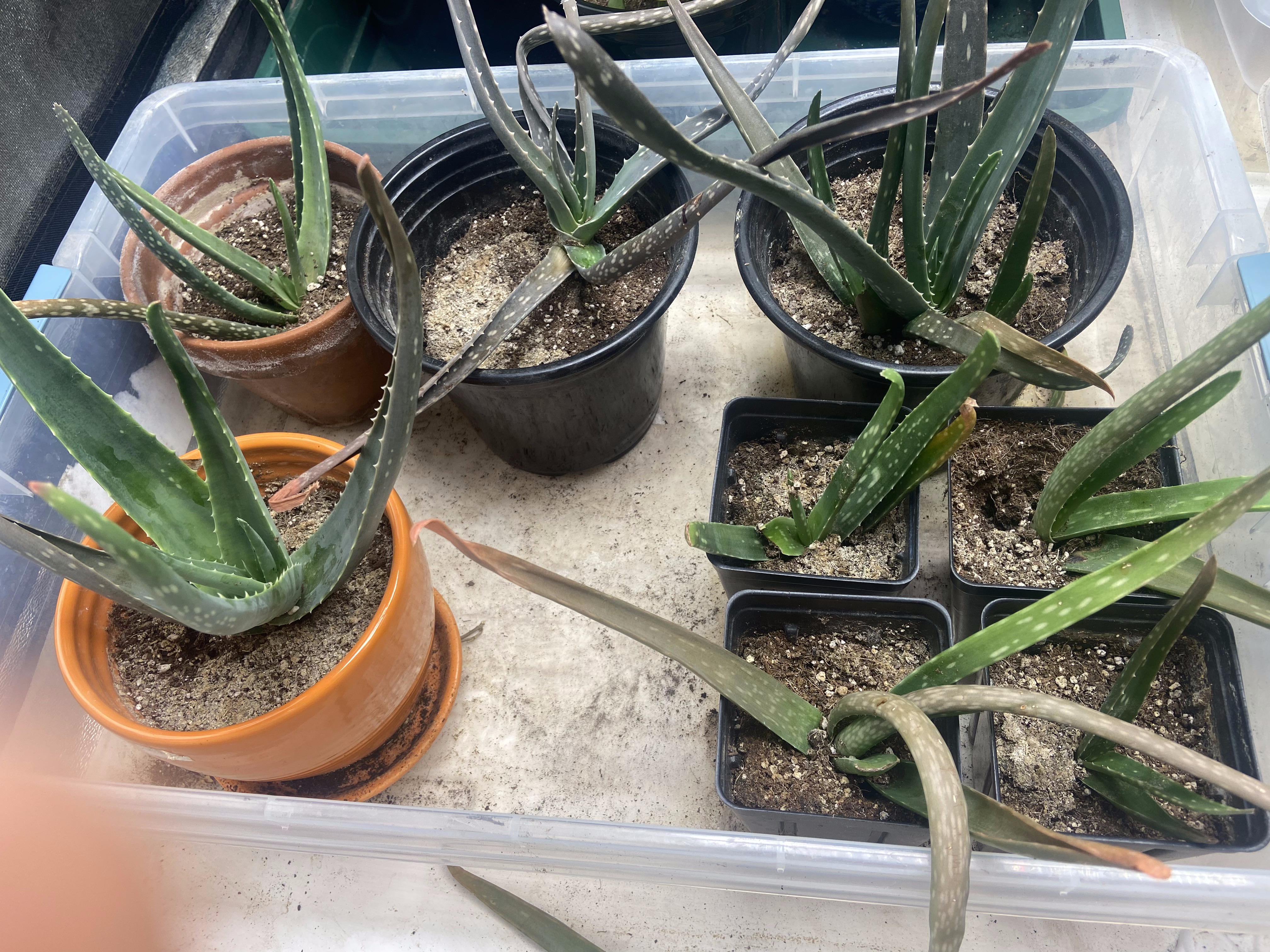
The aloe vera colony started as one plant and became many through pup division — side shoots that root readily when separated and potted. The mother plant bloomed: three tall yellow flower stalks, each with dozens of tubular flowers opening in sequence from bottom to top over several weeks. Aloe rarely blooms indoors. When it does, it is because the conditions have been met. It is not showy for your benefit. It is doing what it evolved to do.
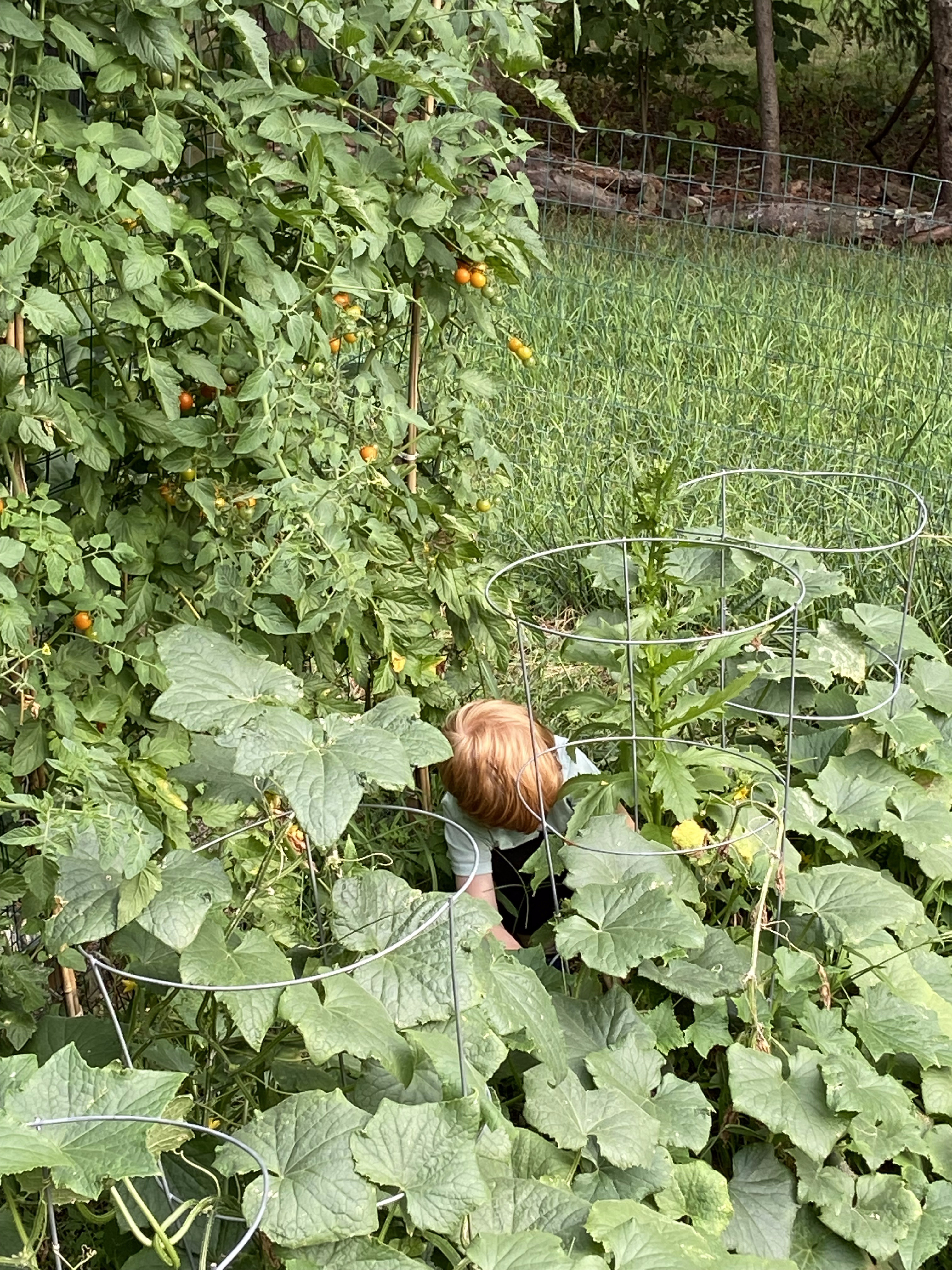
Outside: tomatoes and cucumbers on a wire trellis — planted in spring, left to run by midsummer. By August they overran the frame, grew into each other, and produced more fruit than anyone needed. A child disappeared into them. That's the correct outcome.
Living systems are the most honest feedback loop in the gallery. A failed weld can be ground out. A bad casting can be remelted. A dead plant is a dead plant, and it will tell you exactly when things went wrong if you were paying attention. The moisture sensors are not high technology. They are honesty aids. They make visible what the plant already knows: whether it is wet enough, or not. The discipline is checking the number and responding to it rather than guessing. Most plants don't die from neglect. They die from inconsistency — overwatered once, forgotten the next time. The sensor turns that variable into a constant, and constants are easier to manage than intuitions.