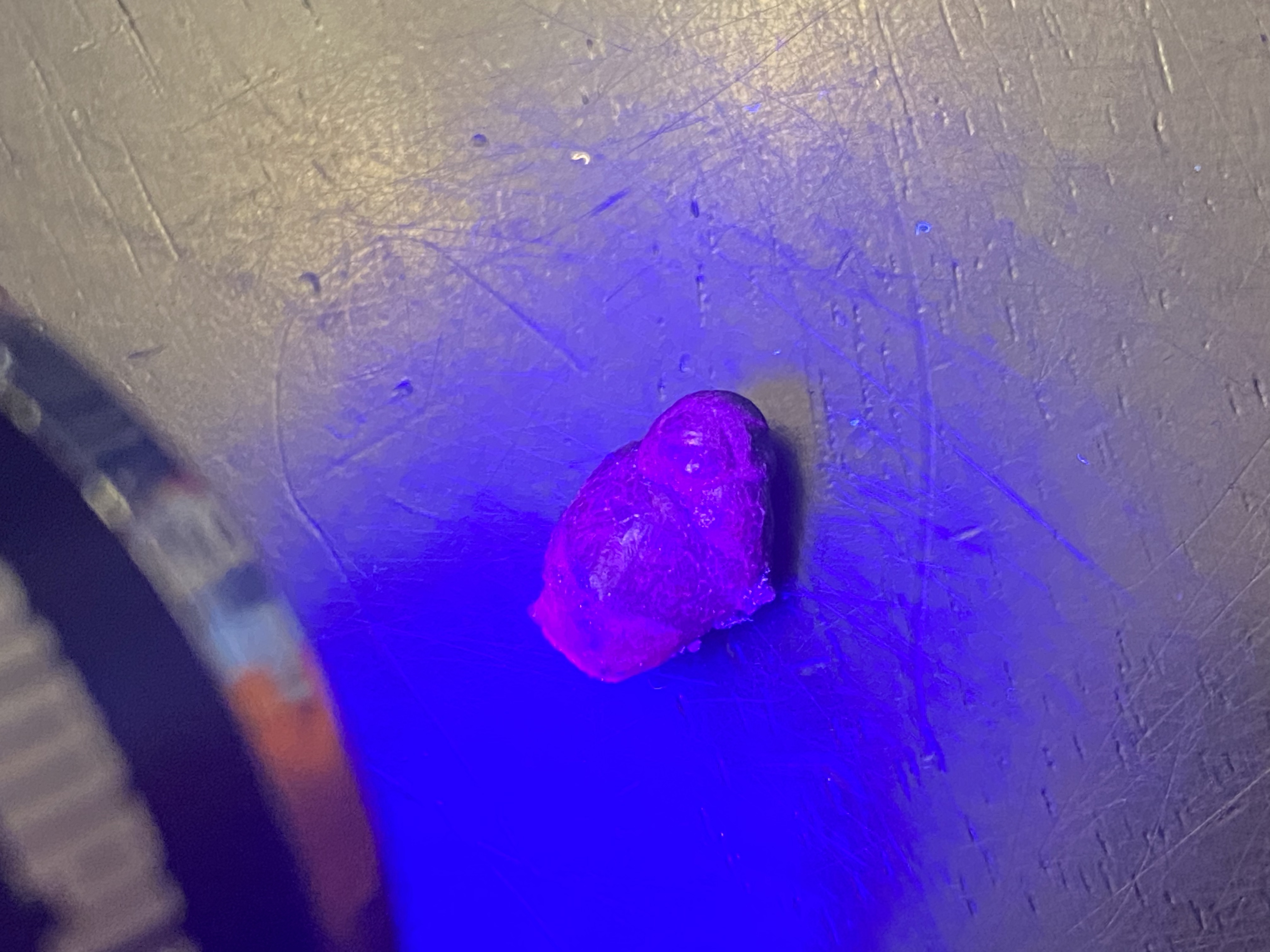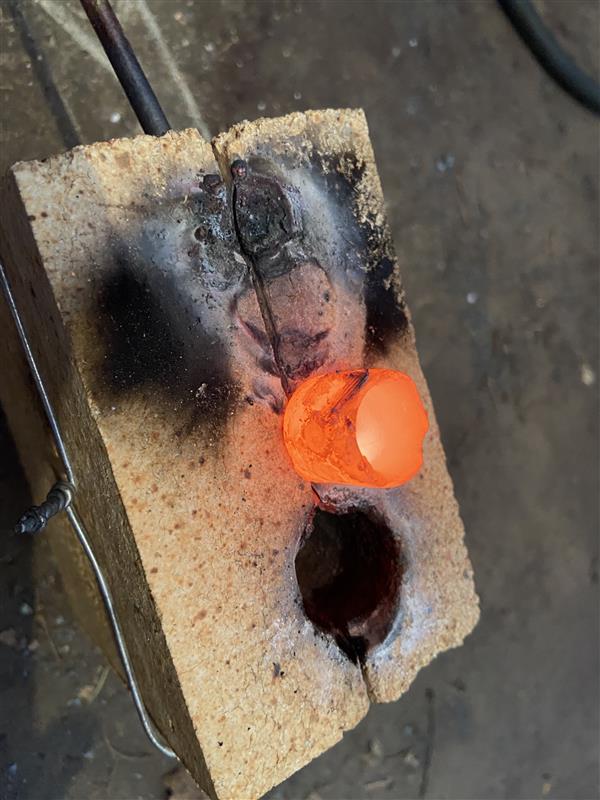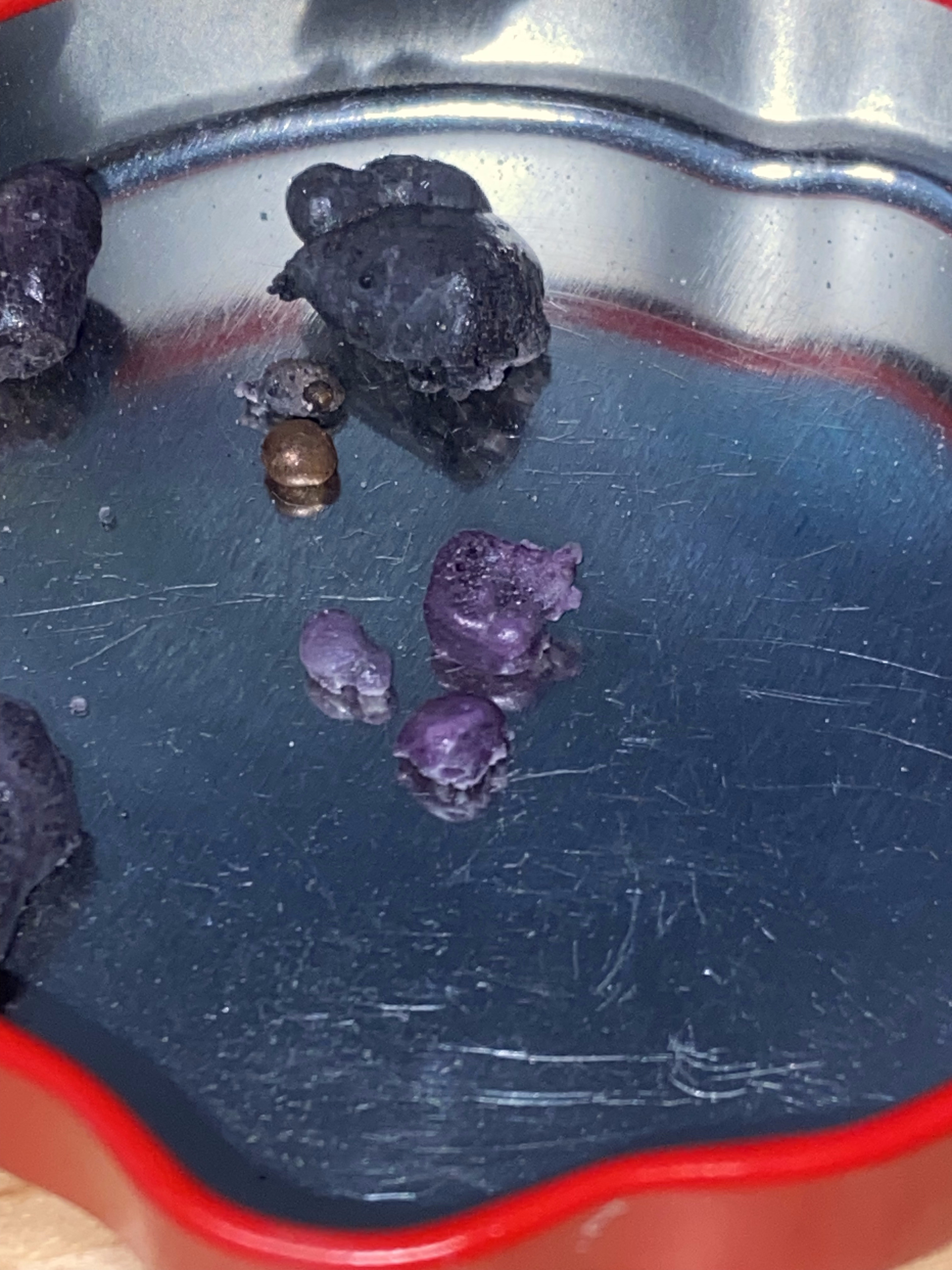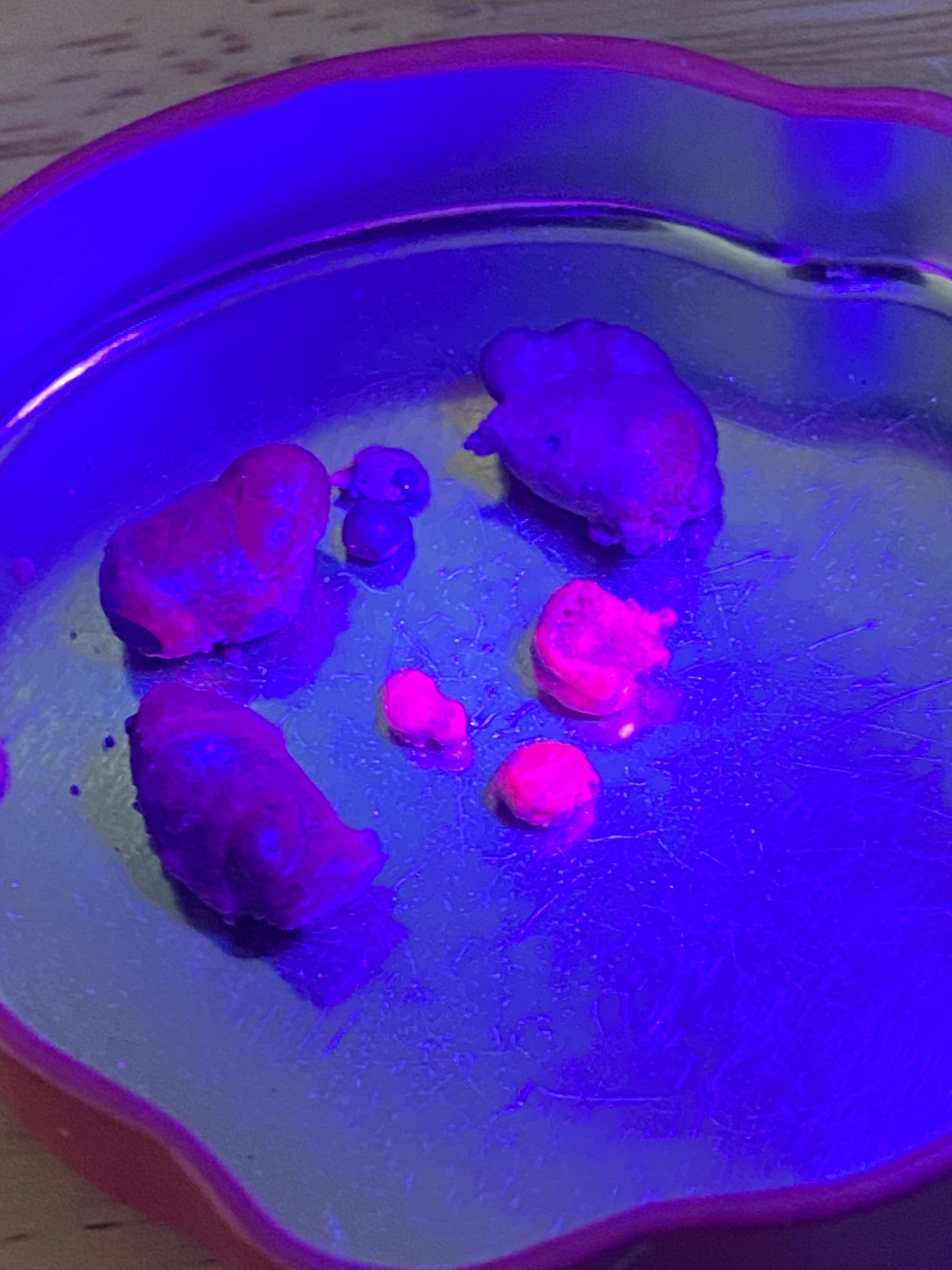
A synthetic ruby is aluminum oxide — corundum — doped with chromium ions. The chromium is what gives it the red color under visible light, and the same chromium is what makes it fluoresce an intense deep red under UV. What happens when you run a high-voltage arc discharge through one is something else entirely: the chromium emission lines mix with the plasma emission spectrum and the result is violet, almost purple, a color that has no business existing at the scale of a stone you can hold in one hand.
The setup is a high-voltage power supply — DC, several kilovolts — driving current through a controlled gap where the ruby is positioned between the electrodes. The arc forms when the electric field across the gap exceeds the dielectric breakdown strength of the air. In open air this produces a white-blue spark. In and around the ruby, with the chromium ions excited by the discharge energy, the color shifts. The plasma picks up the spectral signature of the material it's passing through.
Electrode geometry matters more than you'd expect. The arc wants to find the lowest-resistance path between anode and cathode, and that path changes as the air ionizes along it. Positioning the ruby in the gap without it becoming the lowest-resistance path — without the arc simply going through the stone rather than around it — requires careful attention to the geometry and to the surface condition of the electrodes. Too sharp and the arc anchors at the tip. Too blunt and it wanders. The photographs required approximately forty separate discharge events to produce six usable frames.
The UV fluorescence photographs are a separate series — same stone, no discharge, just UV illumination. The stone glows as if it's generating its own light. It is, in a sense: UV photons excite the chromium electrons to a higher energy state; as they relax, they emit red-range photons. This is photoluminescence. The ruby is a very slow, very cold version of the same process the arc discharge runs at catastrophic speed.
The arc reactor was the last project of 2025. There is something appropriate about ending the year with the most energetic process — high voltage, plasma, light that shouldn't be that color being that color. The gallery started in January with resin and a lathe, work that is patient and slow and cumulative. It ended in December with a discharge that lasts microseconds and leaves a photograph. Both are the same practice: apply energy to material, observe what happens, document the result. The scale changes. The curiosity doesn't.