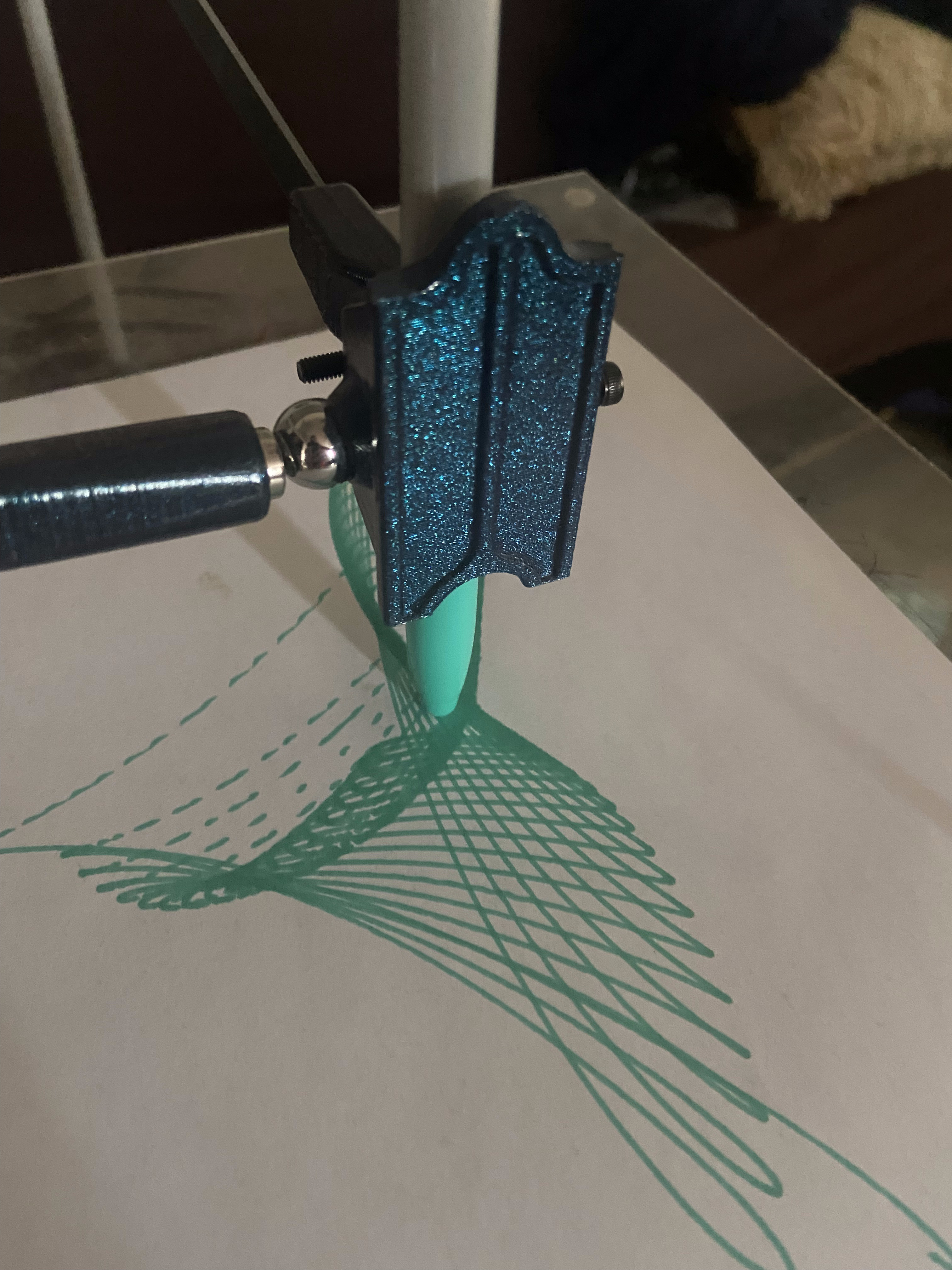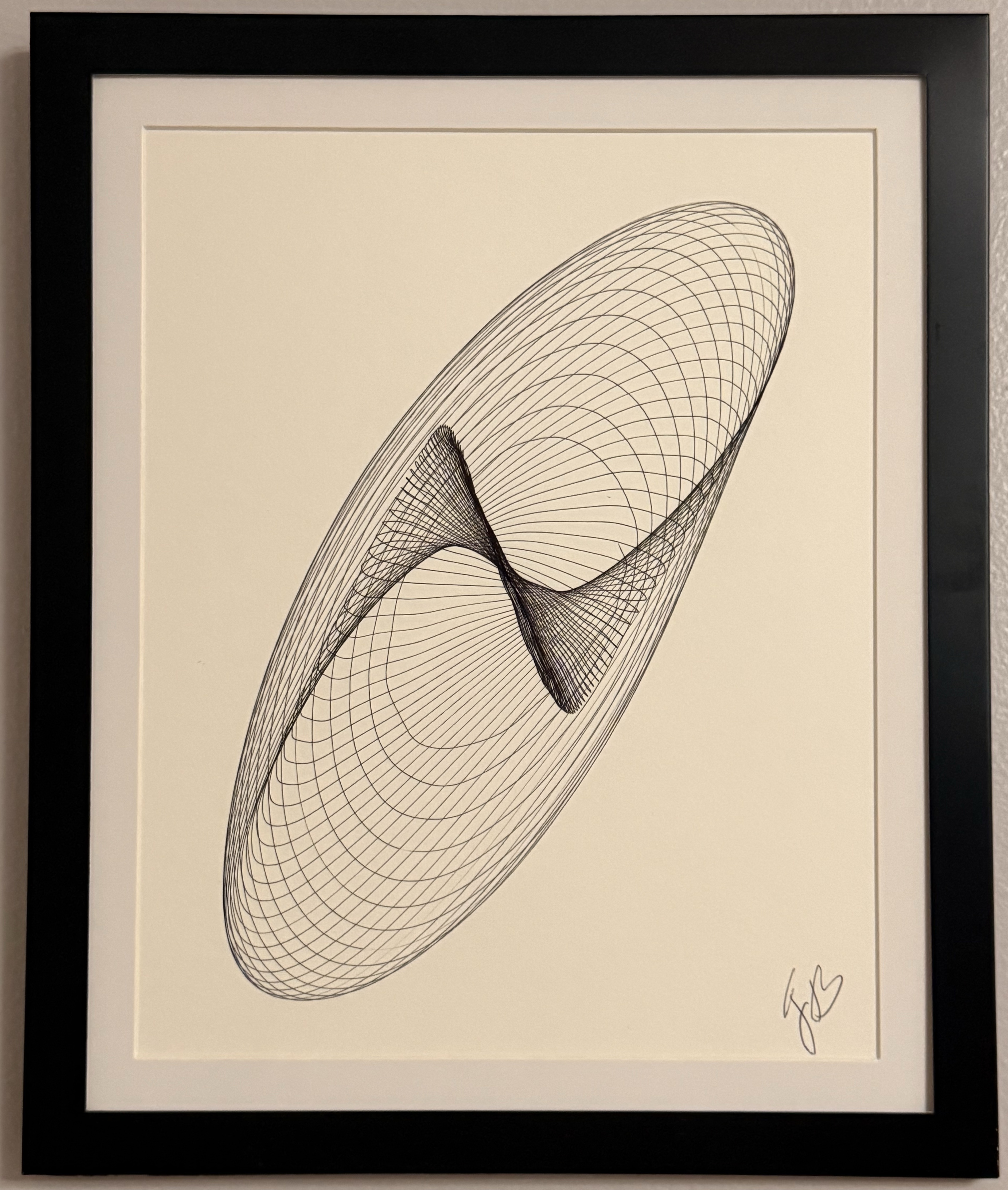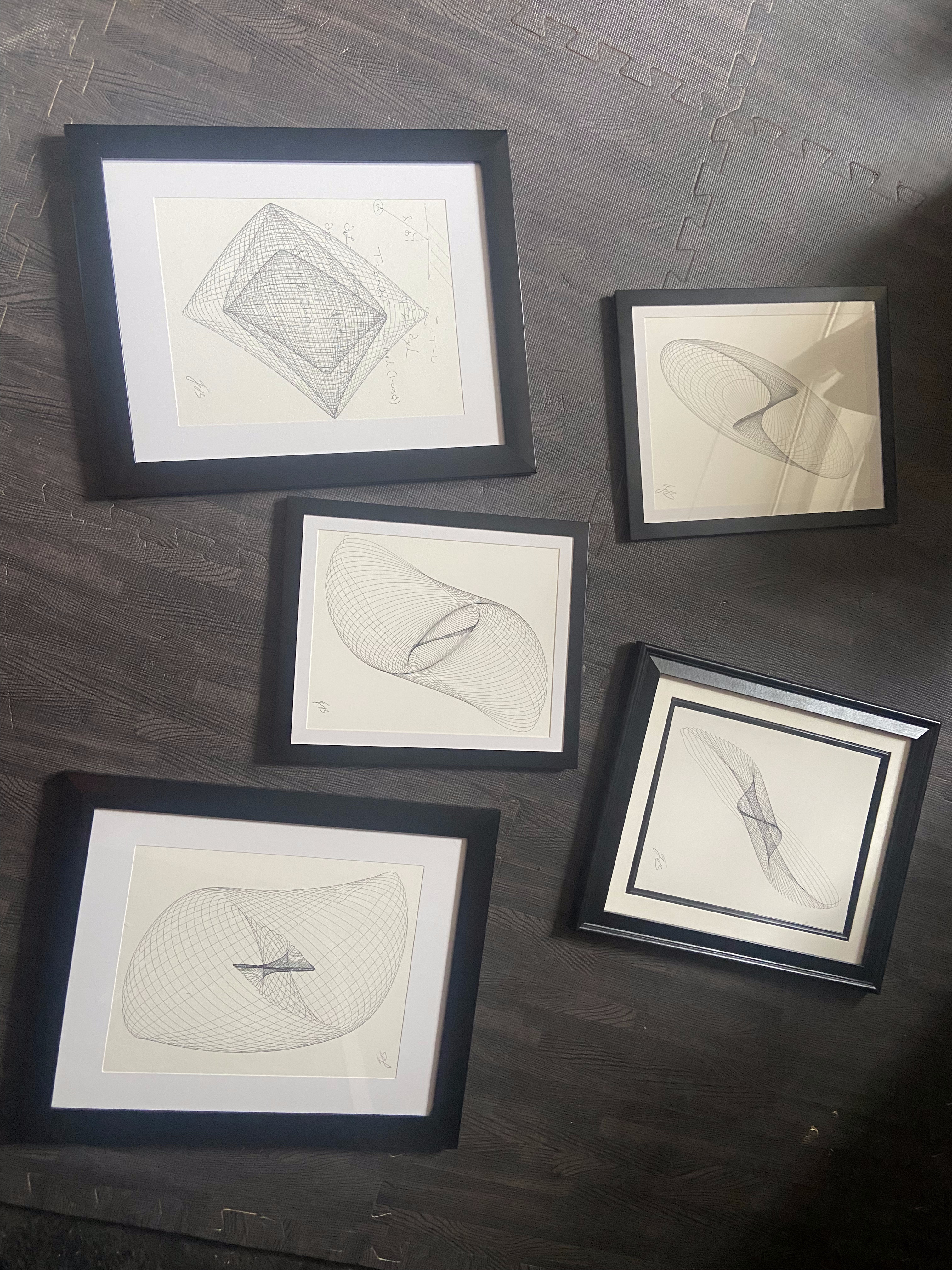
Two pendulums. One drives X. One drives Y. A pen sits at the intersection. What happens when they swing together is entirely determined by the ratio of their frequencies and the phase angle between them — and the result is a Lissajous curve, a mathematical object that looks like it was drawn by someone who spent three weeks practicing. It was drawn by physics in about forty seconds.
The build started with the mechanical design problem: how do you let one pendulum swing in one axis and another in a perpendicular axis while keeping the pen positioned precisely at their intersection? The answer involves a suspended arm, careful counterweighting, and damping weights that slow the decay of the oscillation just enough to let a full curve develop before the amplitude falls below drawing threshold.
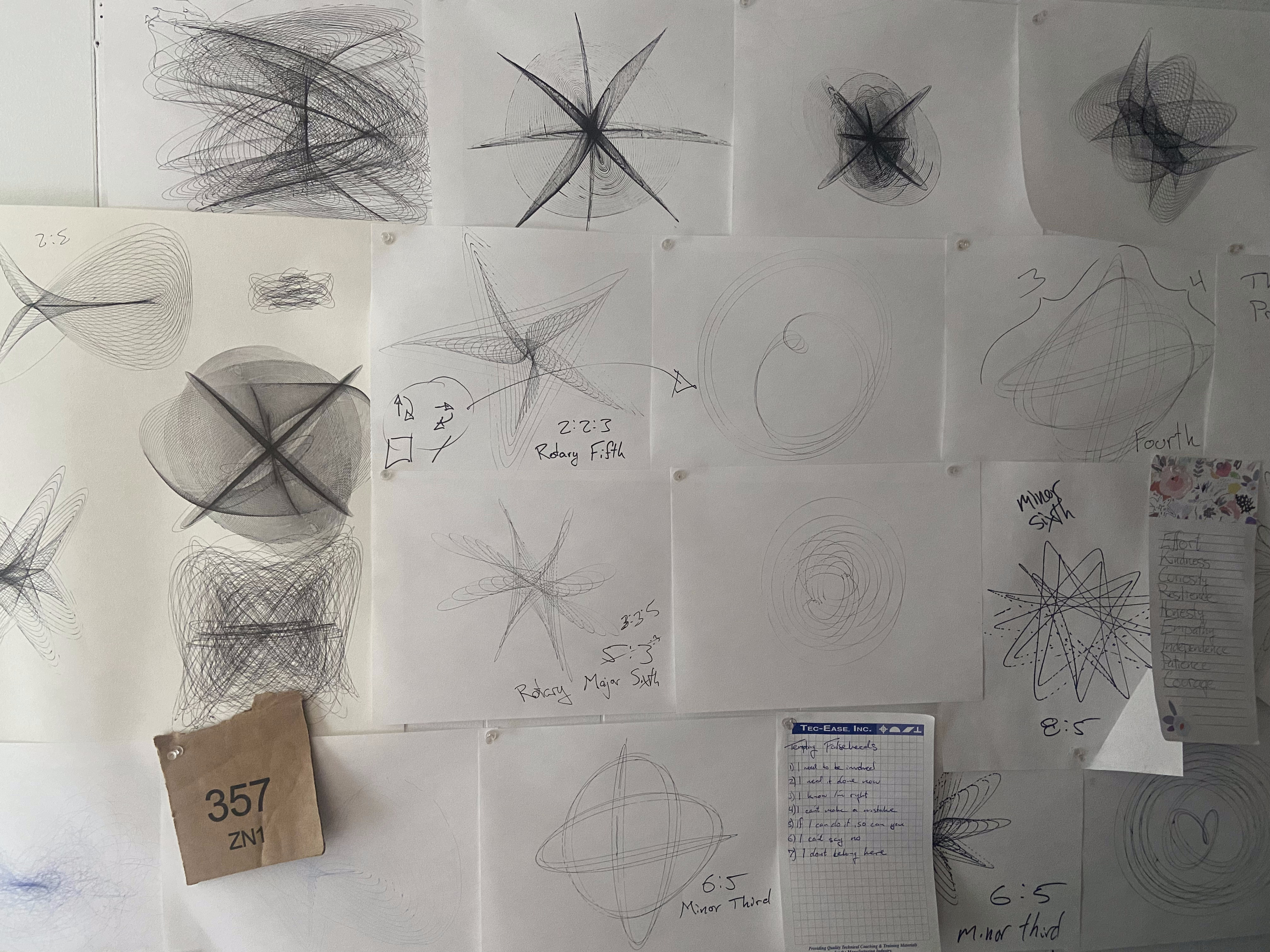
The frequency ratio is the interesting control. At exactly 2:1 you get a figure-eight. At 3:2 you get something that looks like a Celtic knot had a conversation with a sine wave. At 5:4 the curve takes longer to close and the result is a dense, layered thing. Changing the phase offset — rotating one pendulum forward or backward relative to the other at the moment of release — rotates and morphs the pattern without changing its fundamental topology.
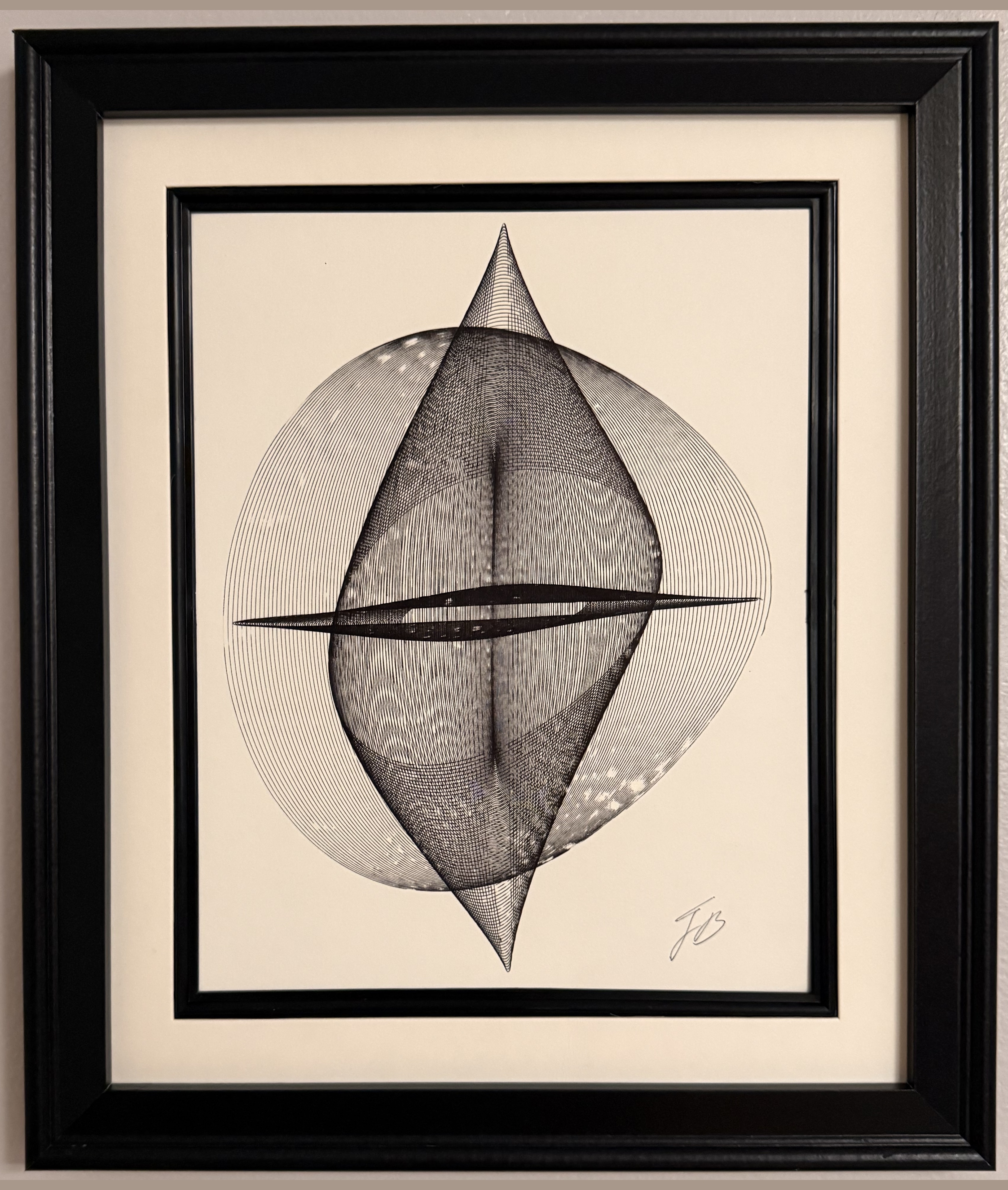
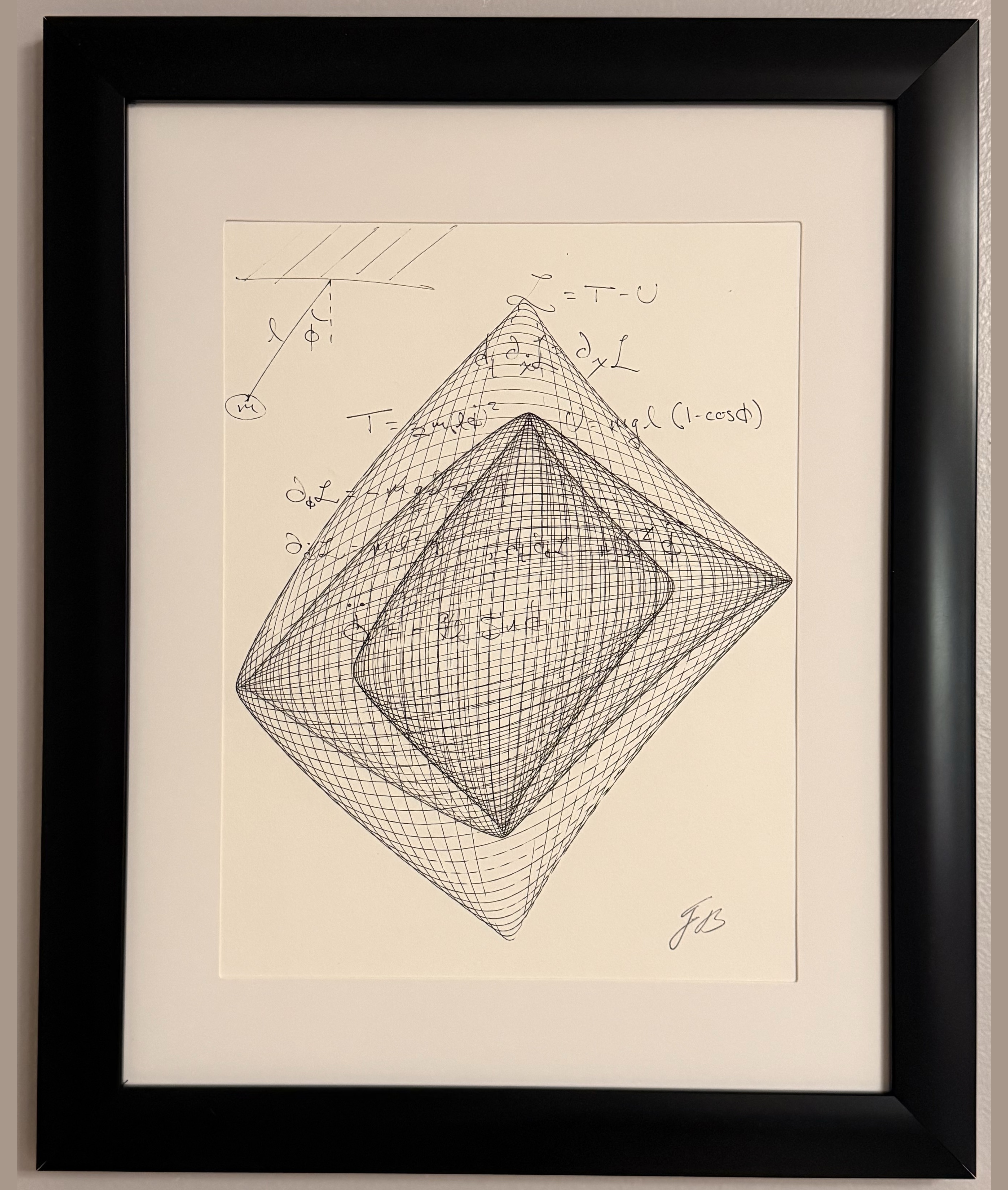
The Development Series drawings are the output of systematic exploration: same machine, same paper, different initial conditions. Each one is a record of a specific release — a set of physical parameters that will never be reproduced exactly. The curves cannot be drawn by hand. They can only be set up and let go.
Jules Antoine Lissajous described these curves in 1857 using a tuning fork and a mirror — he made the vibrations visible by reflecting a light beam. What a harmonograph produces mechanically is exactly what he observed optically. The same mathematics, different substrate. The universe is not especially interested in novelty, but it is very consistent.