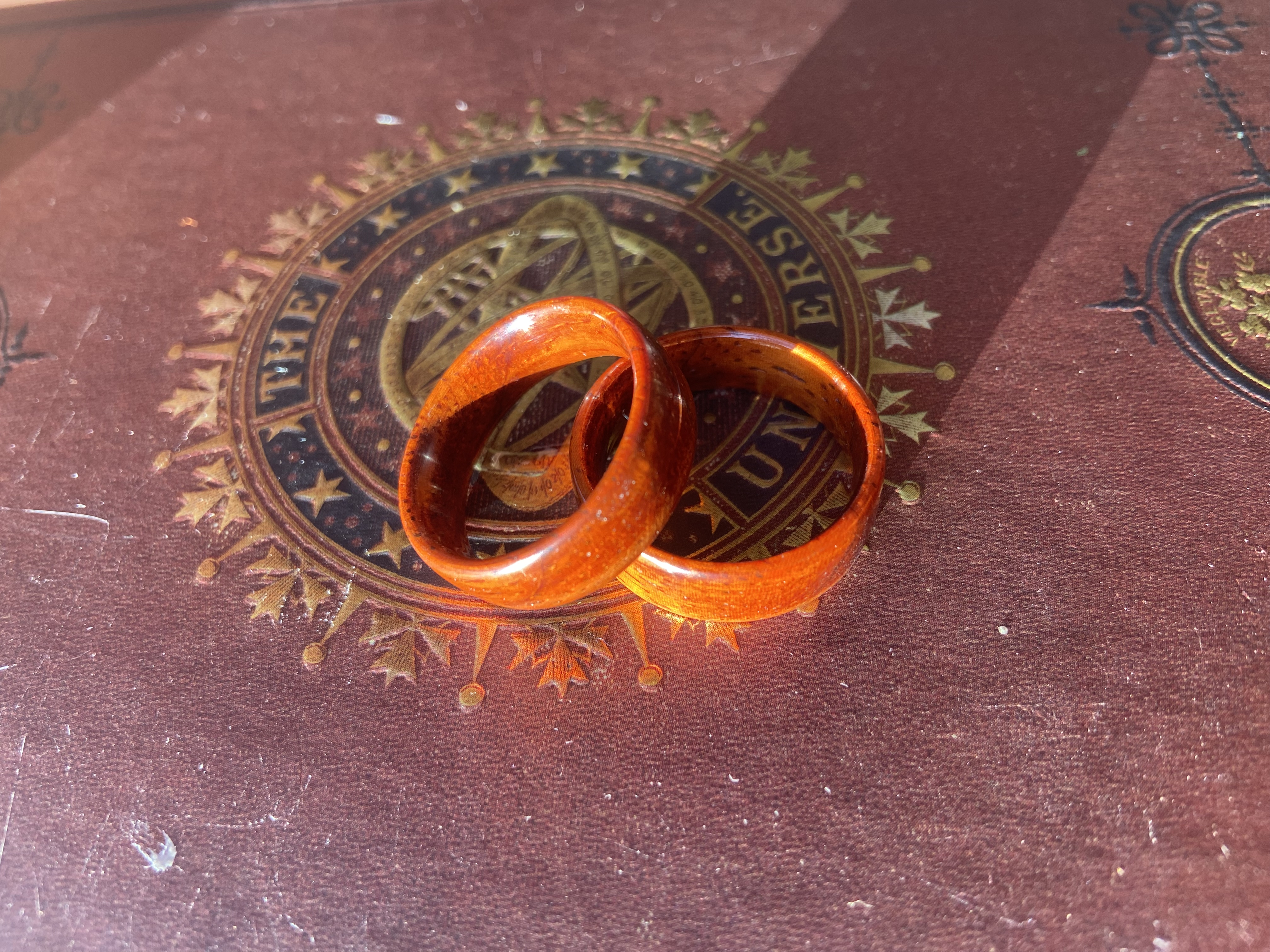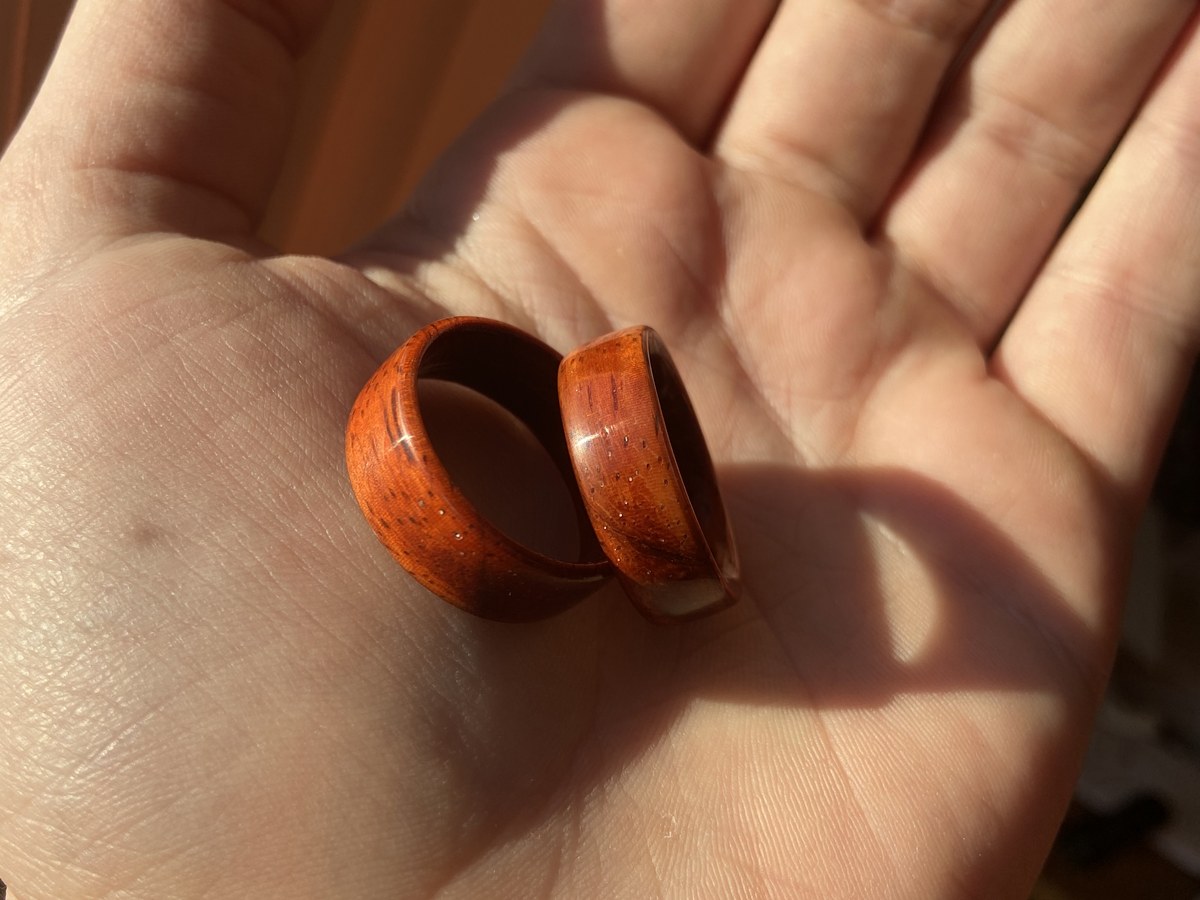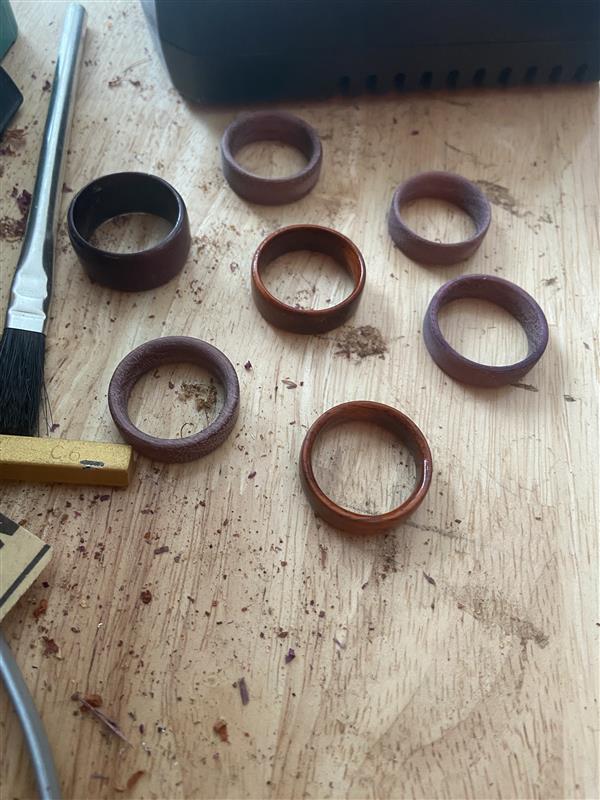
Wood starts as a living thing. The purple heartwood was a tree — exposed to air, it oxidizes and deepens from a pale cream to a rich, saturated violet that looks like it was dyed. The zebrawood earned its name. The paduk is red-orange, the kind of color that seems like it should be synthetic and isn't. The okume is quieter — fine-grained, consistent, almost plain beside its companions. Together they are a small inventory of what trees are doing when nobody is watching.
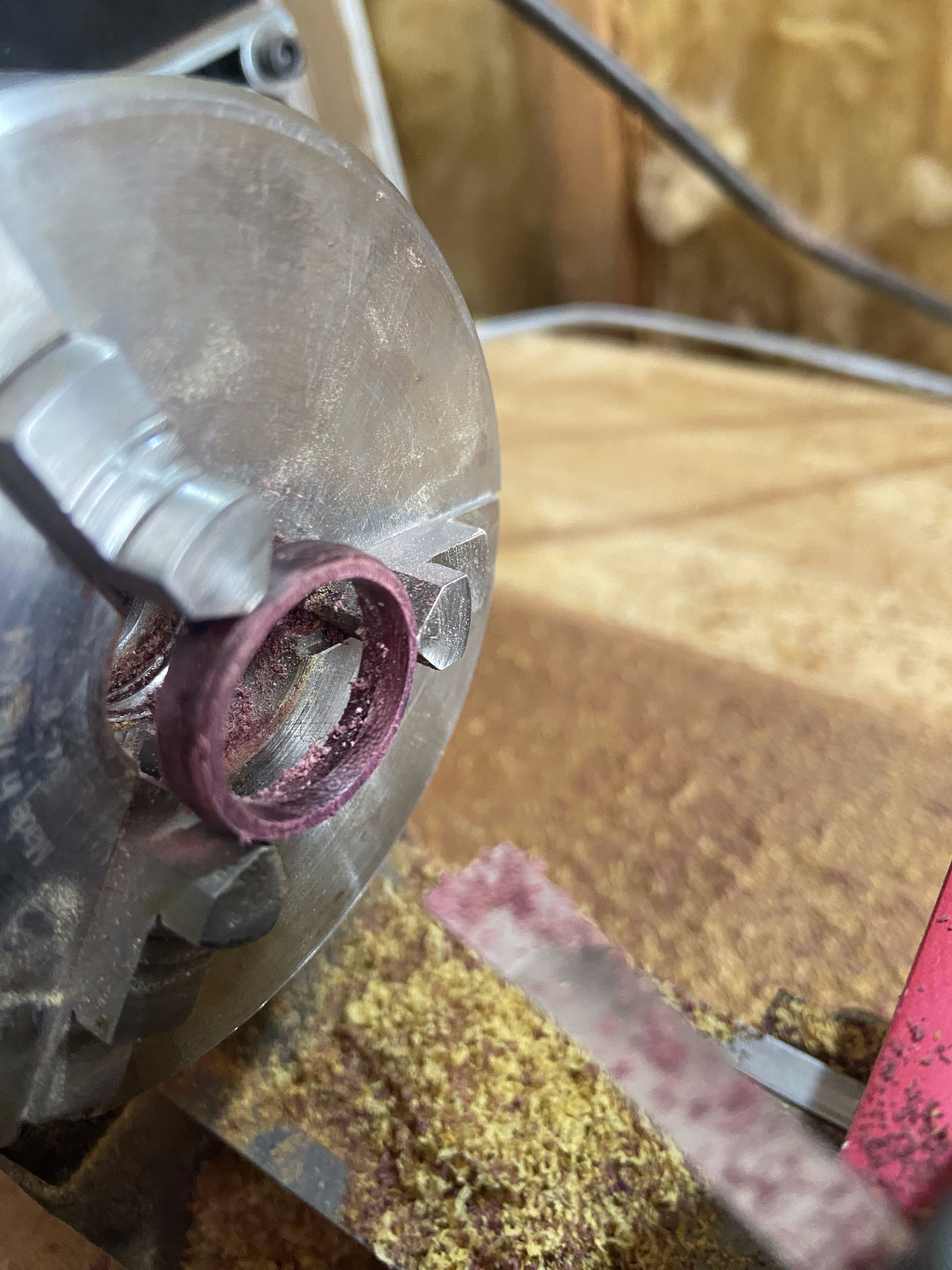
The lathe is where the ring comes out of the blank. A rough cylinder of wood goes on the mandrel, the spindle starts, and the gouge begins removing everything that isn't a ring. Wood cuts differently from species to species — the paduk is almost buttery; the zebrawood wants to tear if you're not paying attention; the purple heartwood is hard and dense and lets you know it. You learn to adjust pressure, angle, speed. You learn by listening to what the tool is telling you.
That is the whole point of the name. The attentive ear is the essential instrument in any craft that involves material — wood, metal, resin, stone. Every process has a sound that tells you what is happening: the pitch of a tool on a spinning blank, the change in tone as the wall thins, the moment something is about to go wrong. The rings are named for what you have to do to make them well. If you're not listening, you'll find out the hard way.
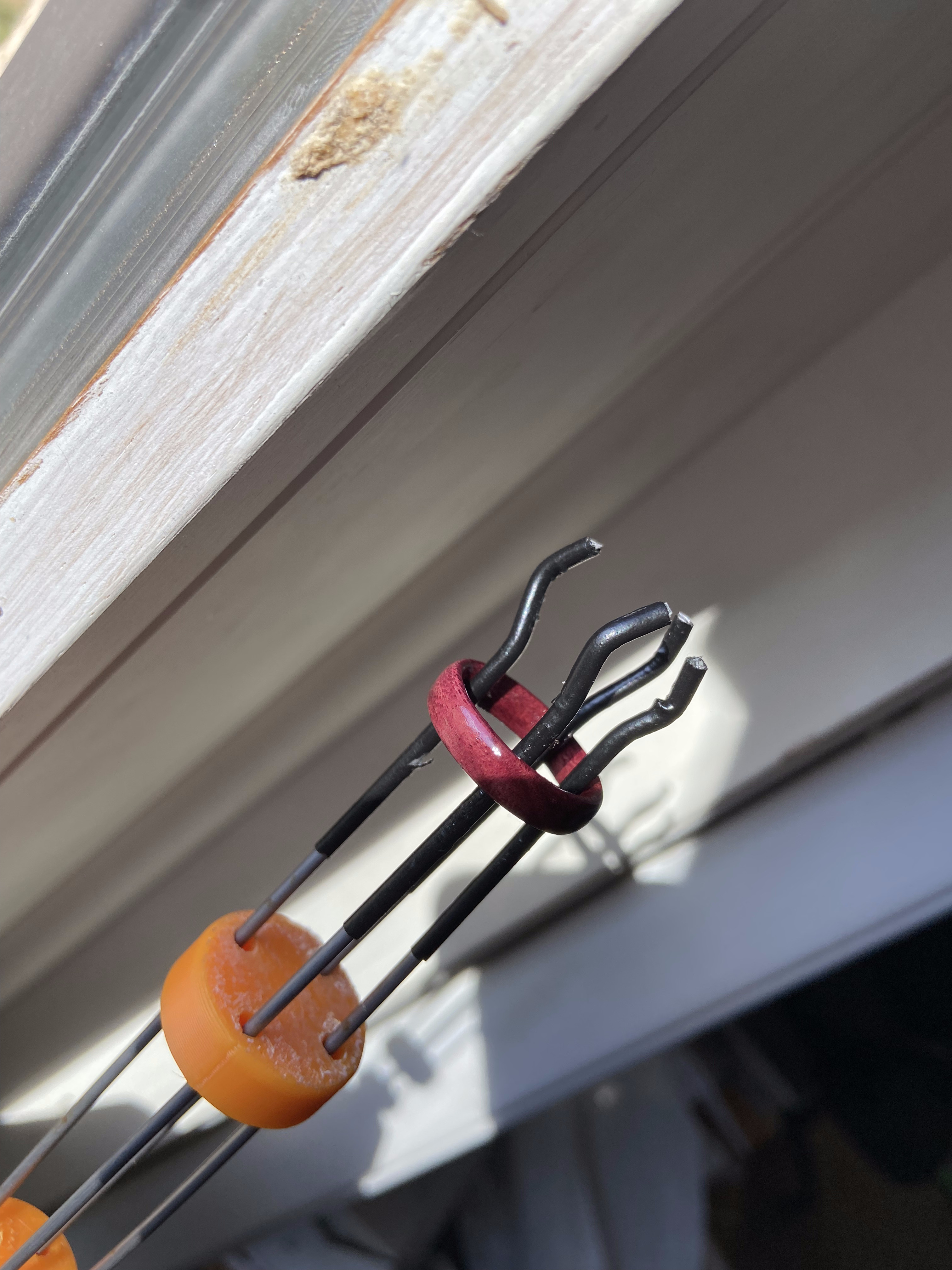
Sanding is the long part. 120 grit to knock down the tool marks. 220, 400, 600, 1000, 1500. Each pass refines what the last left behind. The grain opens as the surface clears. By 1500 you're not sanding anymore — you're coaxing. A final thin coat of sealing glue locks the surface, brings out the depth, and gives the wood its permanent color. The purple deepens. The zebrawood snaps into contrast. The paduk glows.
Six rings, January. Four species. Each one a different conversation with a different material.
The ring is a reminder to always be listening — to the material, to the tool, to the process. Not as a philosophy, but as a practical discipline. The attentive ear catches what the eye misses: the moment a wall is getting thin, the grain direction changing, the tool about to dig. Good craft is an act of sustained attention. The rings carry that in their name so the lesson doesn't need to be relearned from scratch every time.