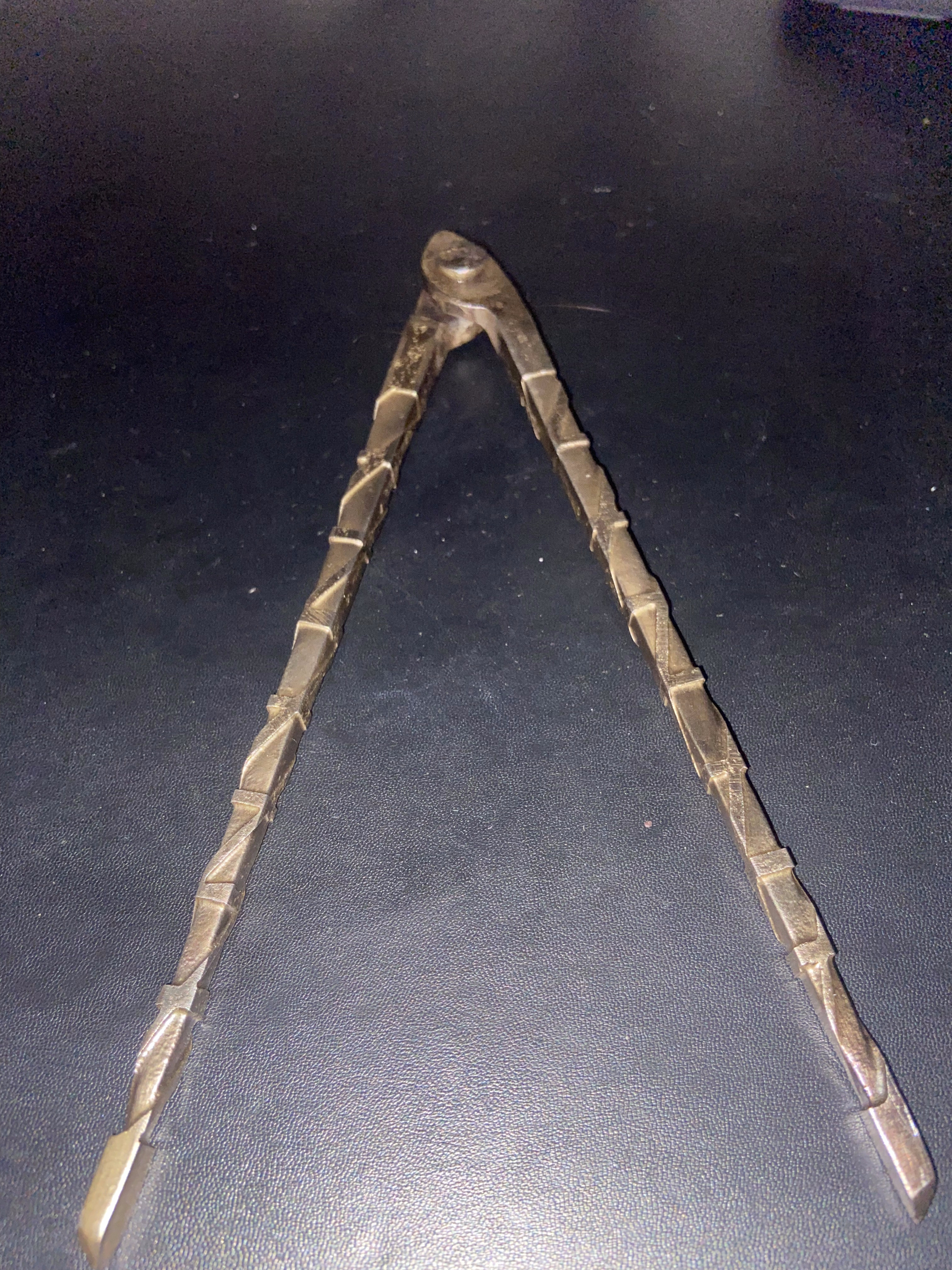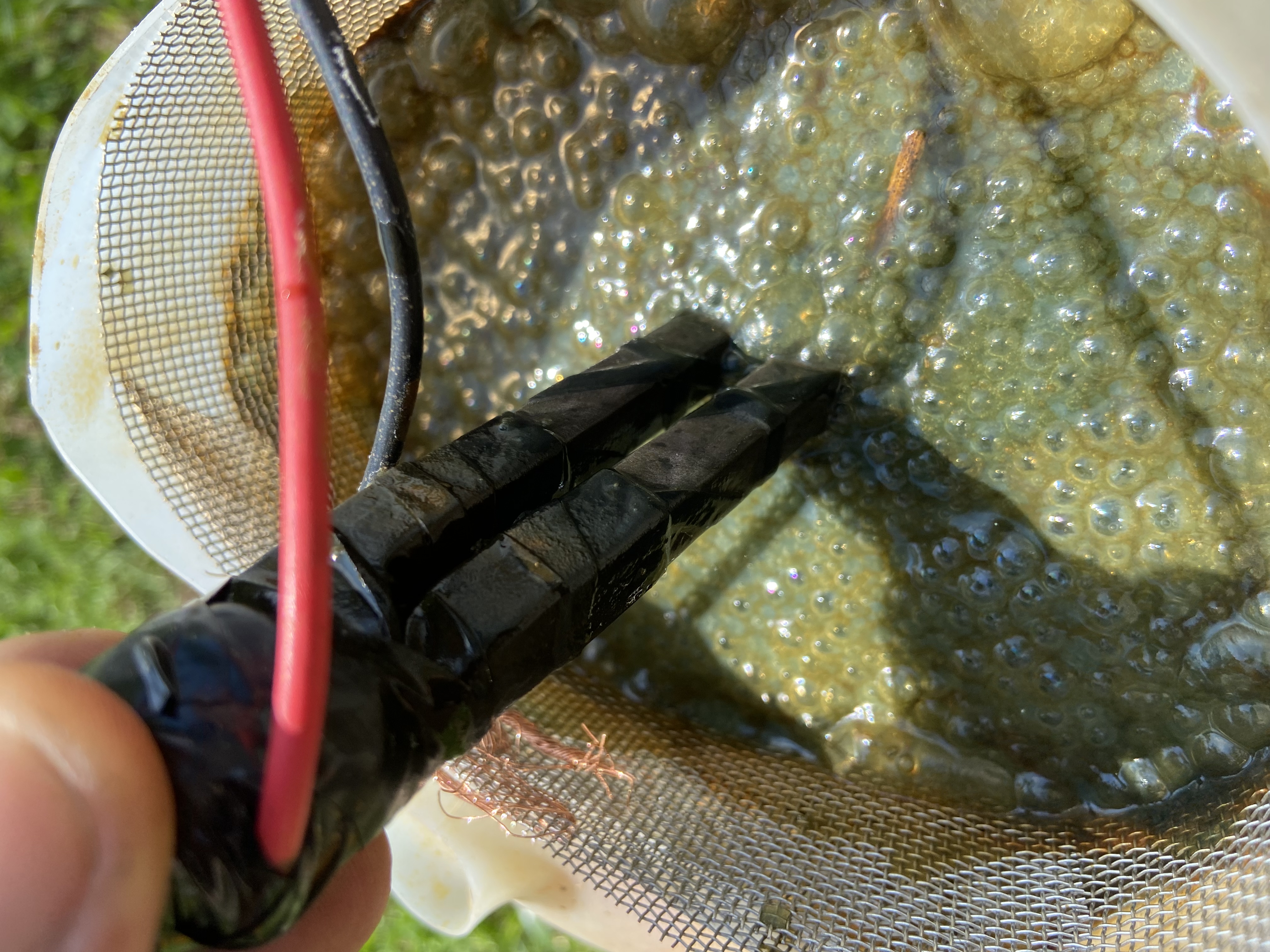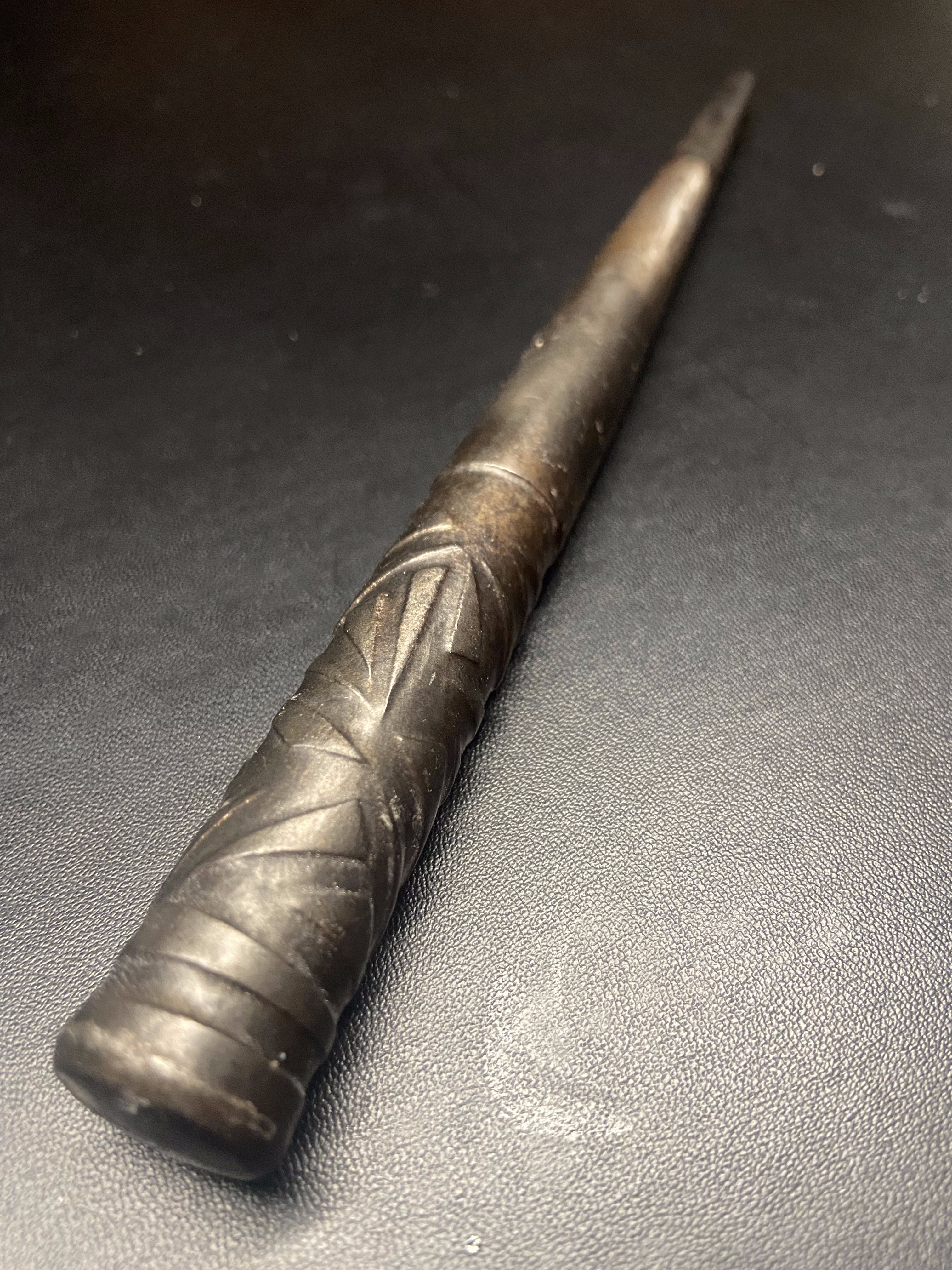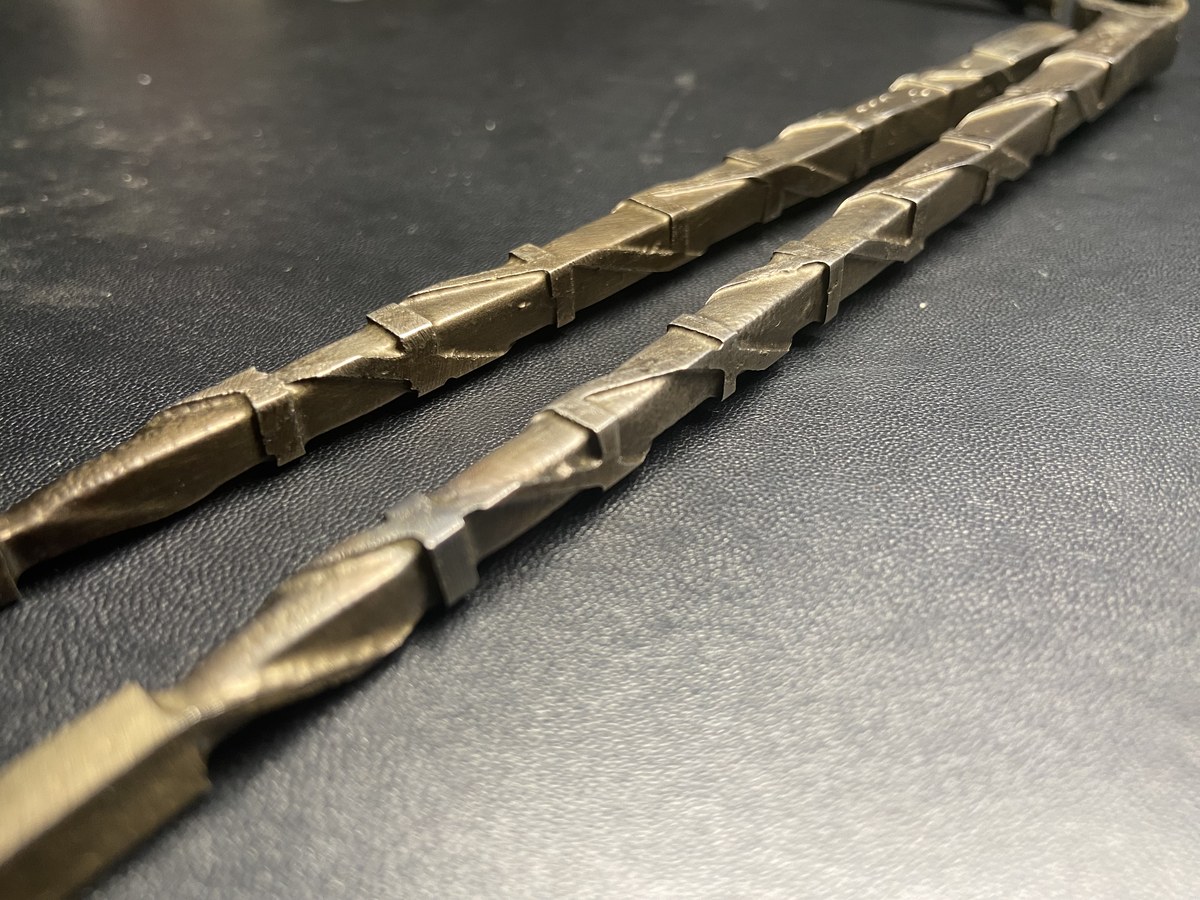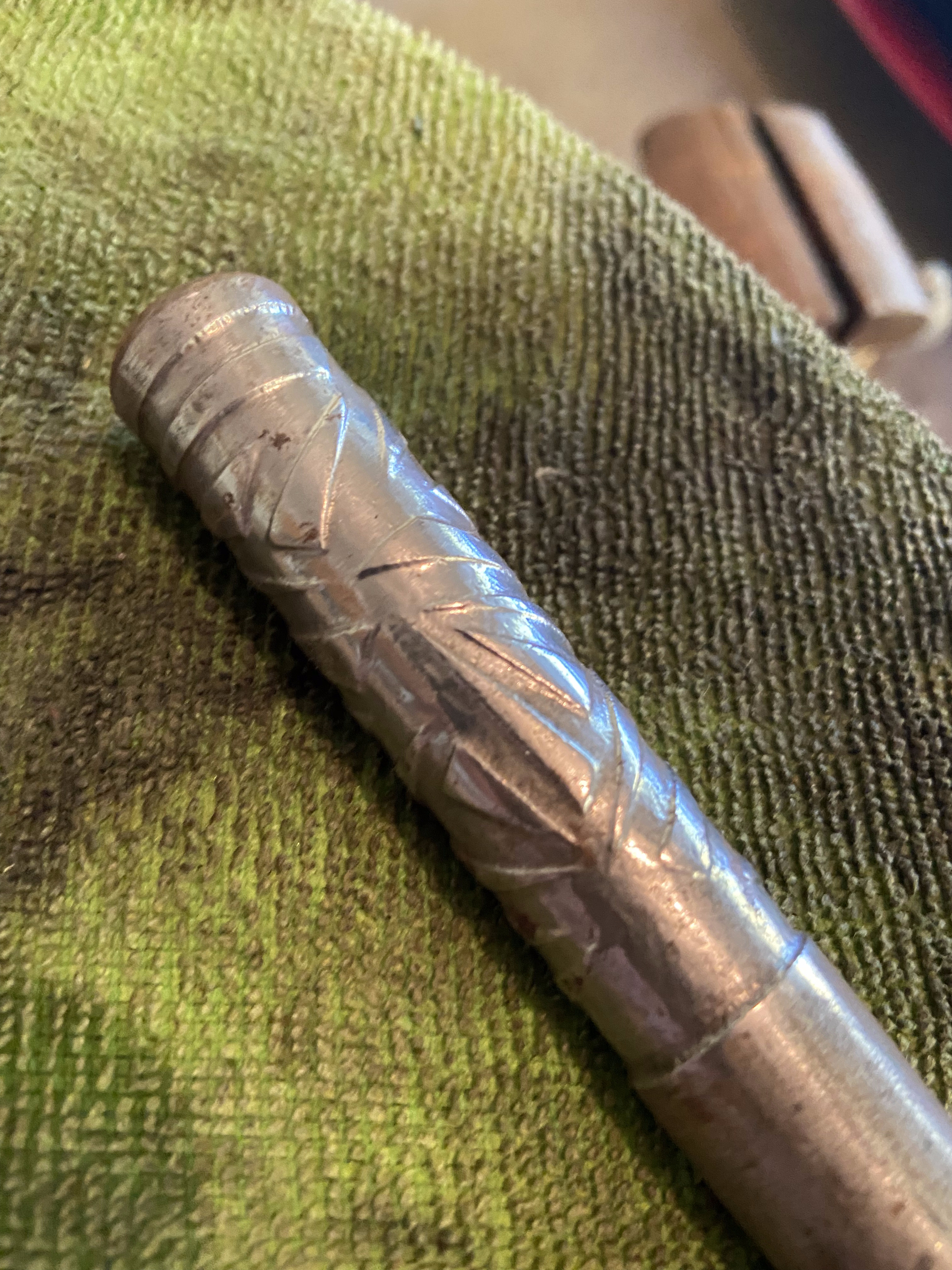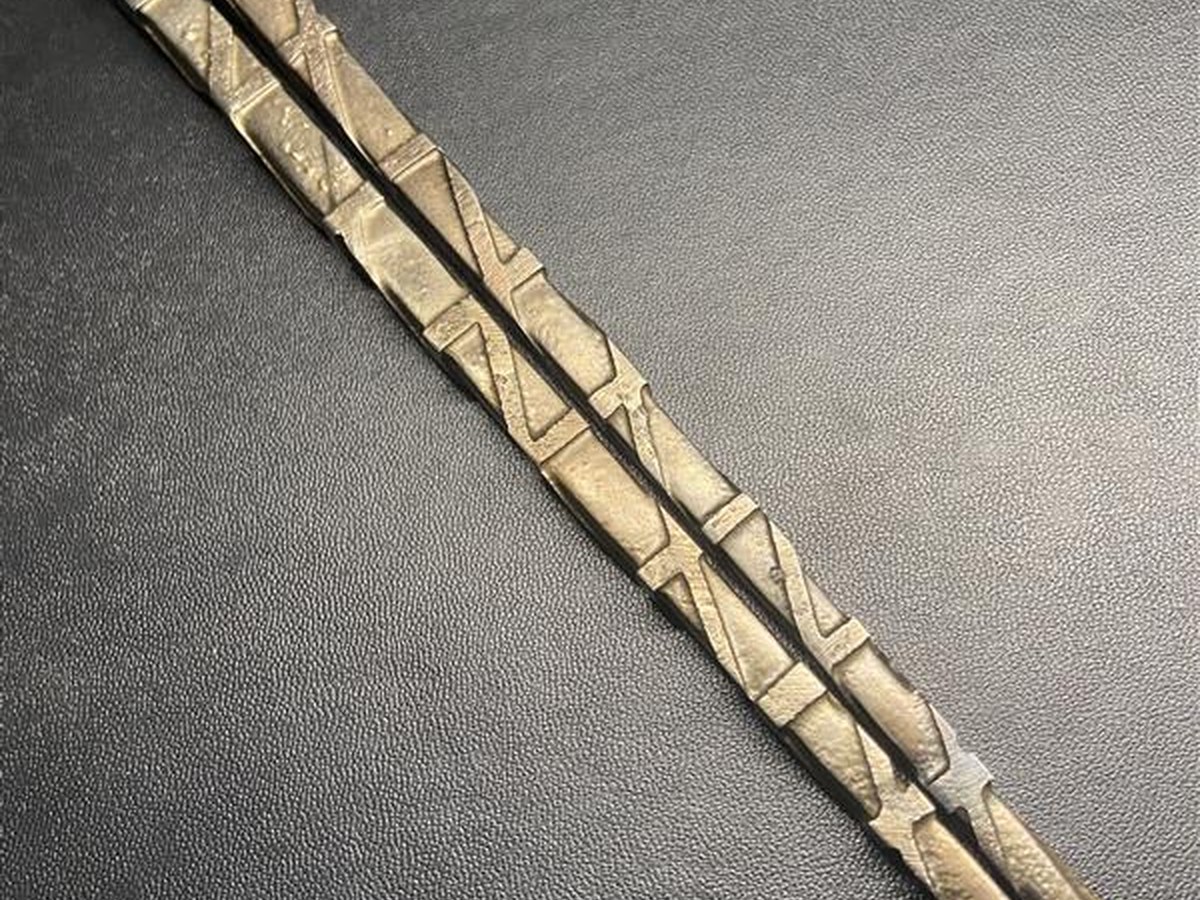
Steel etching with a 12V battery and salt water. Thirty minutes. The electrical tape is the whole trick — mask what you want to keep, expose what you want eaten away. Works exactly as well as it sounds like it should.
The chemistry is galvanic etching: the steel workpiece becomes the anode in a salt water electrolyte bath. Current flows from the power supply through the solution, and at the exposed steel surface, iron ions dissolve into the bath — oxidation at the anode, the fundamental mechanism of rust, accelerated and directed by the applied potential. The masked areas, protected by the tape, are unaffected. What remains after thirty minutes is the pattern of the resist, permanently cut into the metal.
The first attempt looked like it was etched with a potato. Electrical tape adhesive has opinions about salt water at 12V that nobody warned me about — the edges lifted, the resist bled, and the lines came out ragged and indistinct. Switched to a proper masking film. Crisp edges, clean undercutting, exactly the result the chemistry promises. Problem solved, lesson stored.
The controllable variables are the ones that reward attention: current density (which determines etch rate), exposure time (which determines depth), and resist quality (which determines edge definition). Get all three right and the process is remarkably reliable. Get one wrong and you know it immediately, which is one of the better features of a process that produces permanent results.
The bath itself — salt water in a non-conductive container, with a cathode plate suspended opposite the workpiece — is the low-cost version of equipment that professional metal finishers run at industrial scale. The principle doesn't change with the budget.
Most fabrication processes are reversible to some degree — you can sand back a surface, re-pour a casting, re-cut a joint. Electrochemical etching is not. The material that dissolved into the bath is gone. The mark is in the metal permanently. There is something clarifying about working with an irreversible process. You stop treating it as a draft.