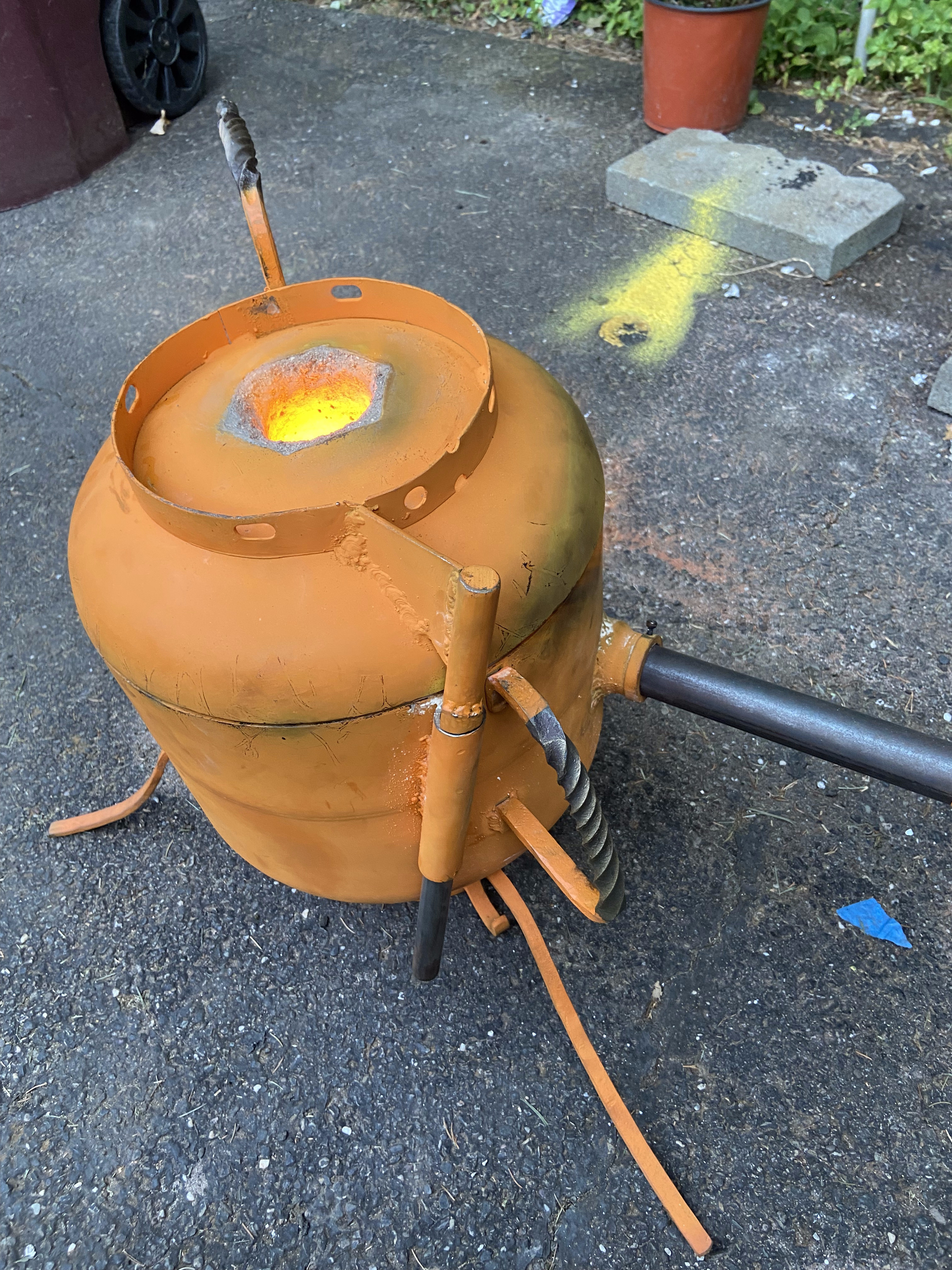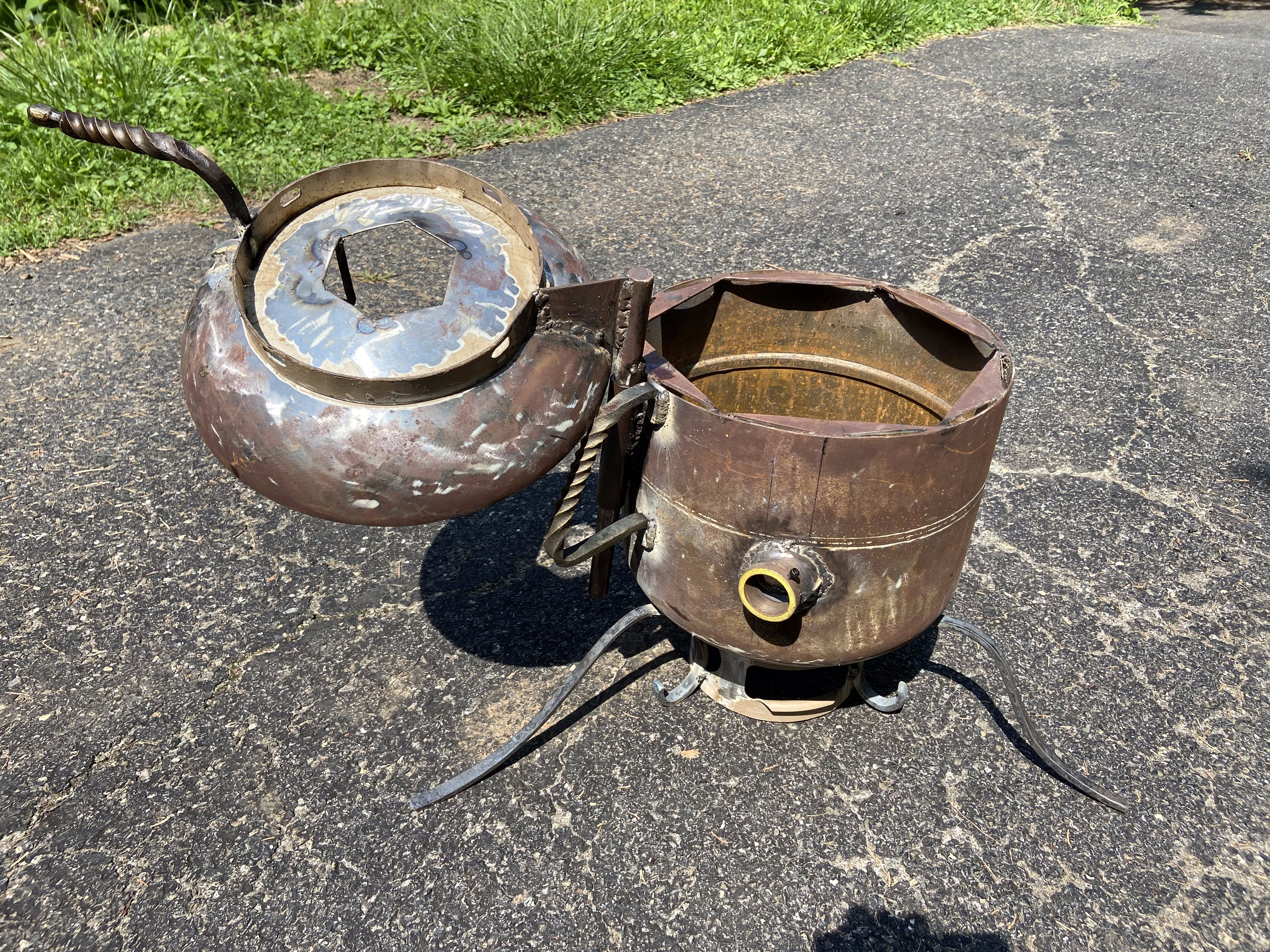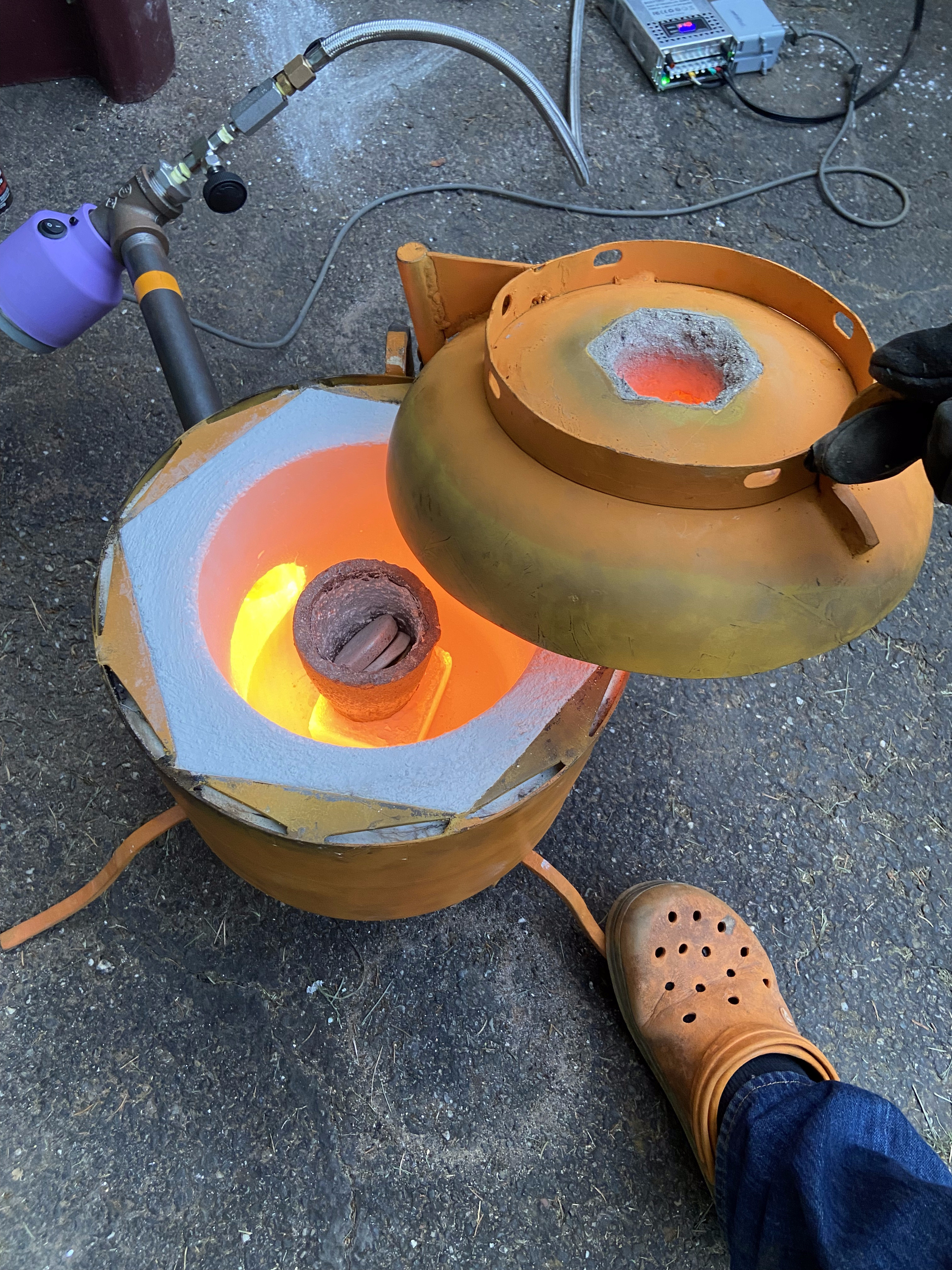
Aluminum melts at 660°C. Propane burns at over 1900°C in open air, hotter in a confined refractory chamber. The engineering problem of a backyard foundry is not generating enough heat — propane does that readily — it's containing and directing it efficiently enough that the heat goes into the metal instead of into the sky. That's what the refractory is for. That's what the furnace is.
The body started as a repurposed LPG cylinder — a small propane tank with the valve removed, the interior cleaned and inspected. This is a reasonable starting point for a foundry shell: the steel is already rated for pressure, the geometry is appropriate, and the dimensions are about right for a 3–5 kg aluminum melt. A hole bored through the wall at a tangent angle becomes the burner port. A hole cut through the top becomes the crucible access. Four legs, hand-forged from 12mm steel bar, welded to the base.
The refractory lining is a castable mix — approximately 50% high-alumina aggregate and 50% Portland cement, with additional perlite for thermal insulation. Mixed to a thick paste and cast in-place against a foam form inside the cylinder. The form burns out on the first firing, leaving a clean cylindrical cavity. The refractory cures slowly over several days, then gets driven to full temperature over a series of progressively longer firings to drive out residual moisture without cracking.
The burner assembly runs an electronically controlled solenoid valve and a proportional pressure regulator — not because you need electronics to run a propane burner, but because control over fuel pressure gives you control over temperature, and temperature control is the difference between consistent pours and ruined castings. First aluminum melt hit target temperature in 22 minutes.
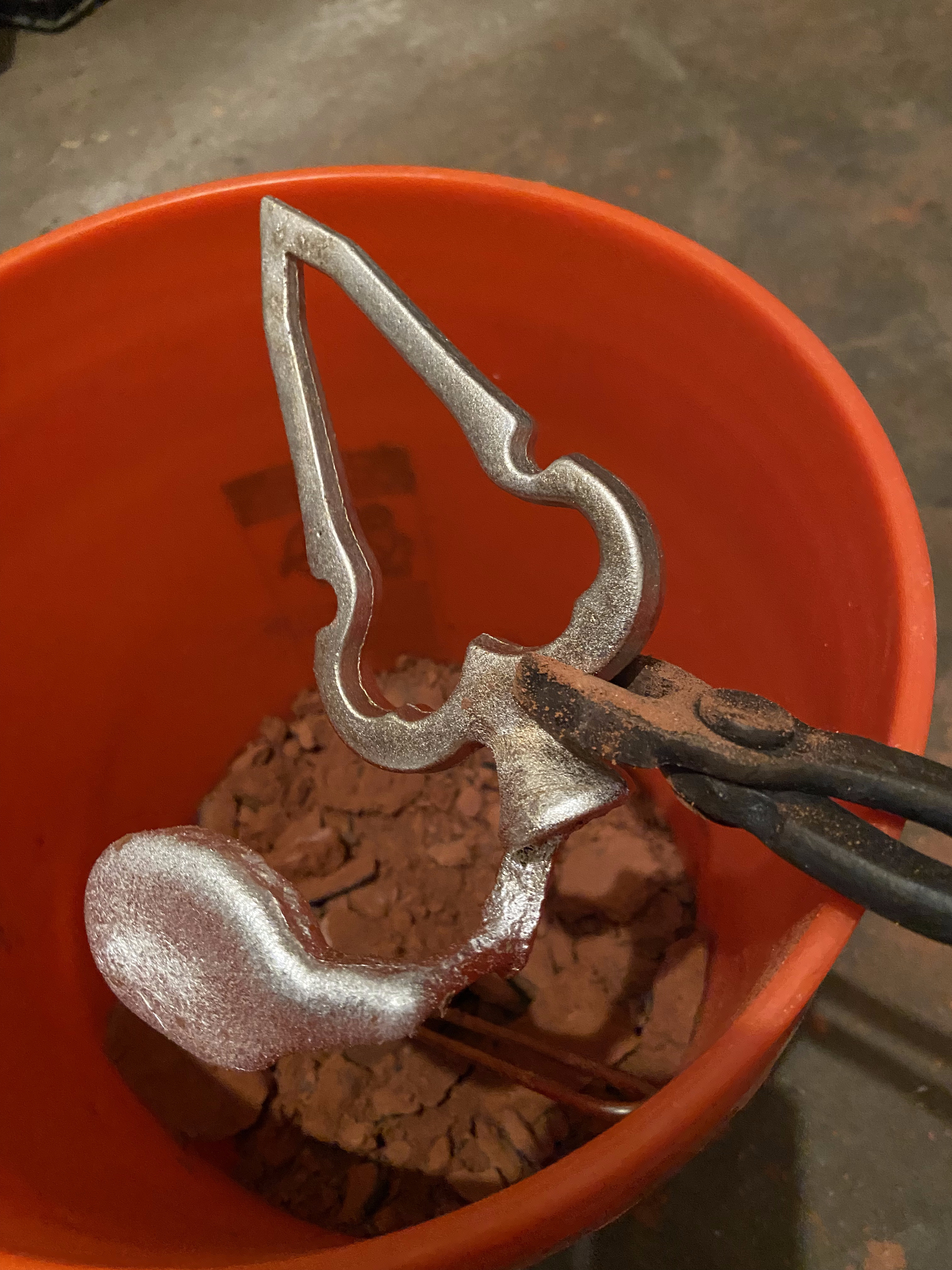
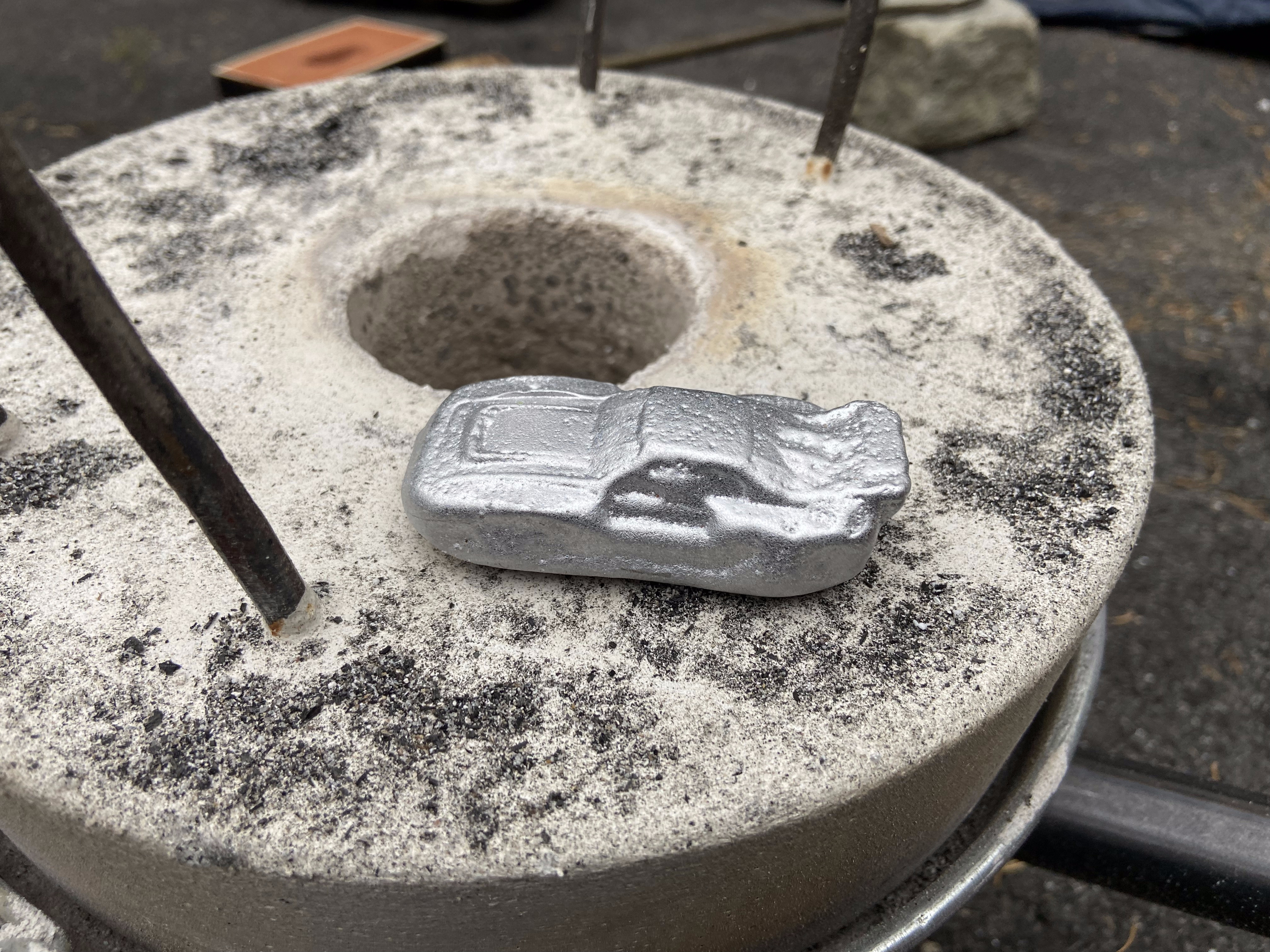
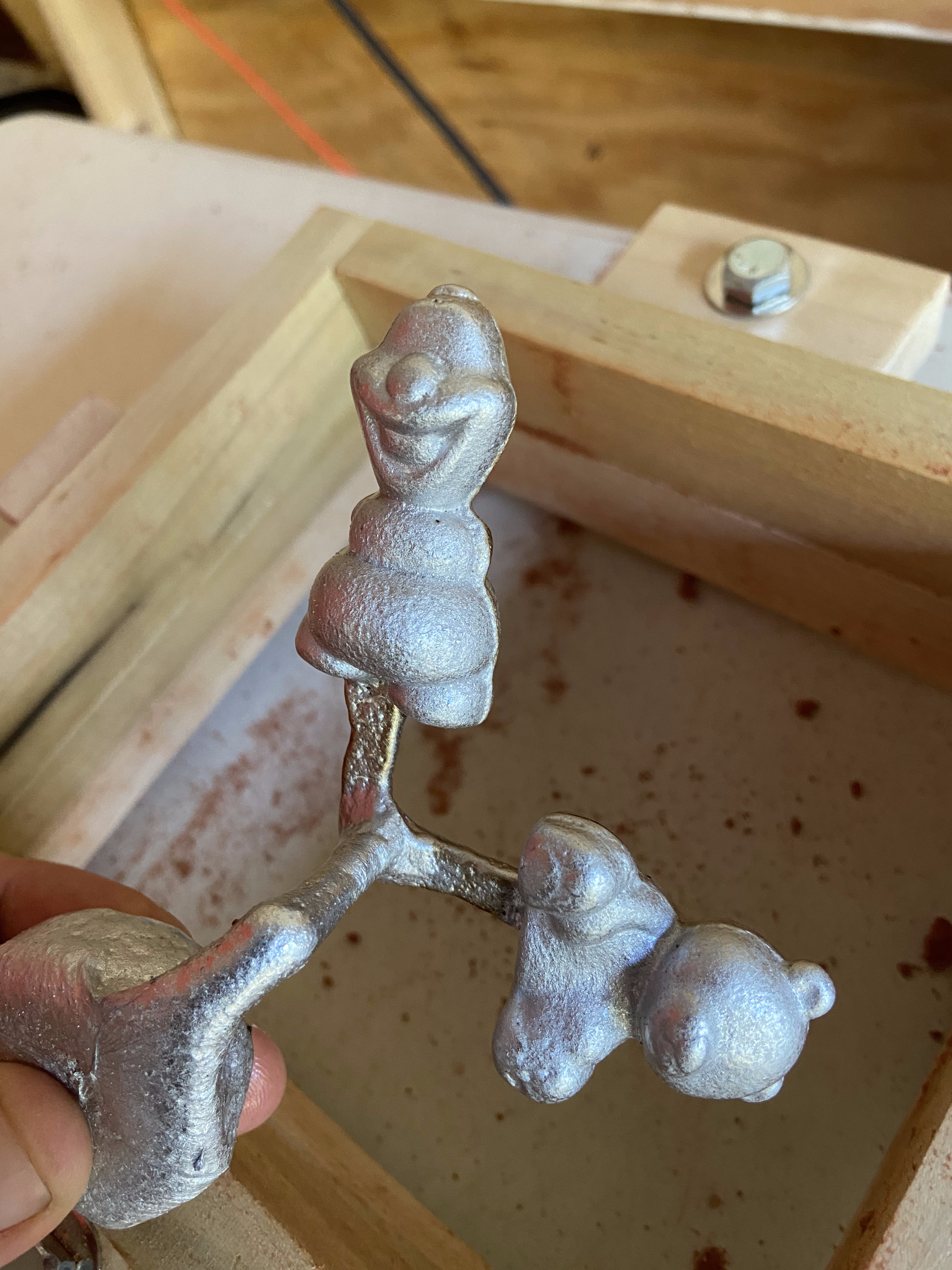
The first cast form was a cross — simple geometry, square cross-section, clean parting line. Sand casting in a two-part mold. The mold had opinions about moisture that I hadn't consulted. The first pour cracked clean in half. A fool, lovingly rendered in aluminum. Dried the sand out overnight, tried again — second one came out perfect.
There is a moment, lifting the crucible out of the furnace, when the material is fully liquid and you are about to commit it to a mold. It has the color of the sun and the weight of consequence. The pour has to be smooth, continuous, and fast enough to fill the mold before the metal freezes at the gates. You do not get to try again until the next heat. This concentrates the attention in a way that few other processes manage.