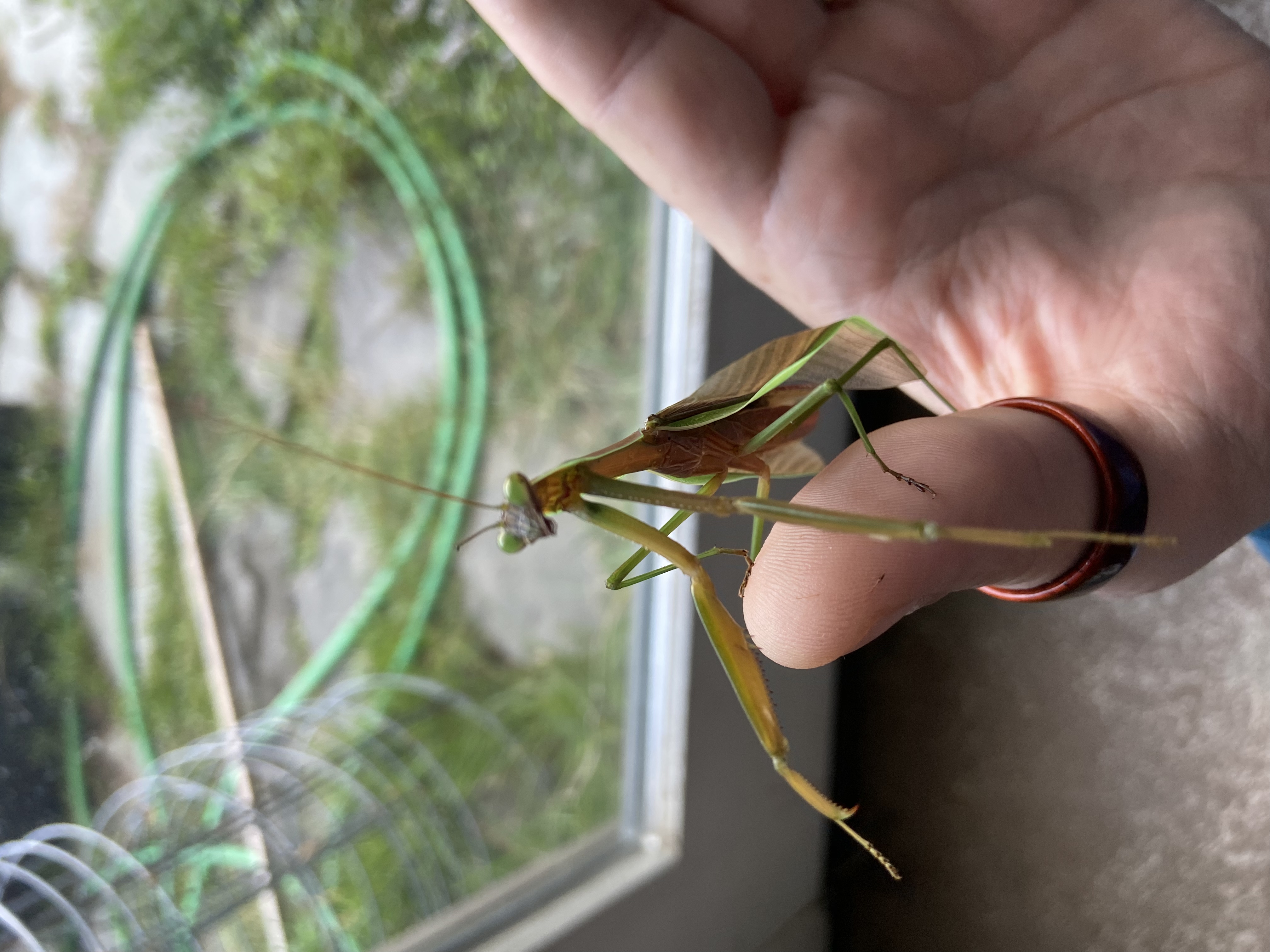
The Ted series is the gallery's recurring acknowledgement that living systems are as technically demanding as any physics project and considerably less predictable. Ted the Turtle arrived in April. Ted the Mantis arrived in September. The name is now a commitment: anything that moves under its own power and requires engineering to keep alive is a Ted.
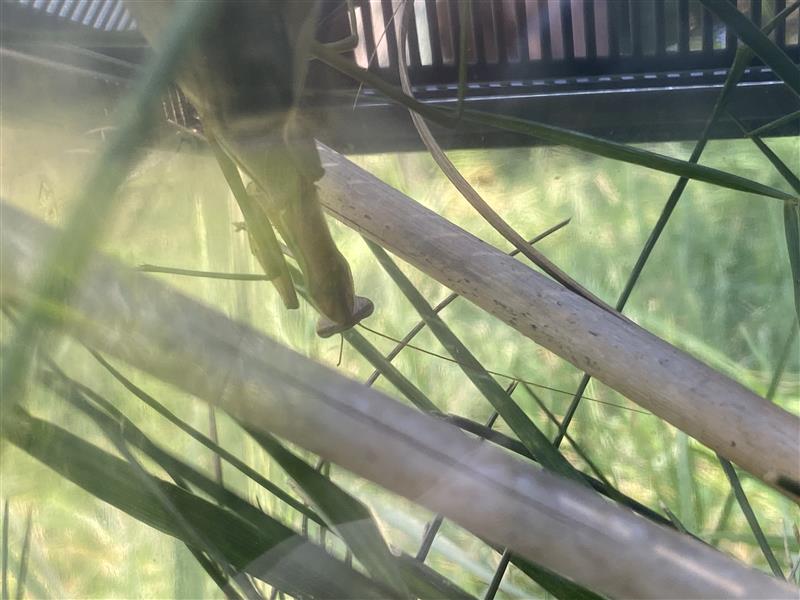
Praying mantises are ambush predators with approximately the self-awareness of a very confident piece of cutlery. They do not know they are small. They do not know you are large. They assess you as a potential threat, determine you are not prey, and return to the important business of waiting for something edible to make the mistake of entering their field of vision. The camouflage photograph is not staged — that is how Ted looks against a branch, in natural light, at arm's length.
The vivarium build is deceptively simple: a mesh-lidded enclosure (mesh, not glass — mantises need airflow or they develop respiratory issues), a humidity gradient achieved through substrate and misting rather than constant high humidity, anchor points for climbing and molting. The critical constraint is molt management. A mantis that molts while hanging must have enough vertical clearance below it to fully extend its new exoskeleton — inadequate clearance causes a deformed molt and is nearly always fatal. This determines the minimum height of the enclosure.
Feeding is prey management at a small scale. Crickets, dubia roaches, and occasional waxworms — sized to approximately two-thirds of the mantis's head width, which is the threshold above which the prey can cause injury. Ted ate on schedule and showed no interest in being photographed during it, which is fair.
Every Ted project produces the same observation: the animal is doing exactly what it evolved to do, optimized for its environment over millions of years, and your job as the keeper is to provide conditions that let it do that without impediment. You are not teaching it to be a mantis. It already knows. You are engineering the circumstances. That's the same discipline as everything else in the gallery — just with a subject that has opinions and can jump.